Loading page…
Best Ways to Revise for GCSE: Proven Techniques That Actually Work
Published on
Every student wants to walk into their GCSE exams feeling prepared and confident. But knowing what to revise is only half the battle, knowing how to revise effectively is what truly makes the difference between average grades and outstanding results.
The truth is, there is no single best way to revise for GCSE that works for every student. The best revision techniques depend on your learning style, skill set, and the subject you are revising for. What works brilliantly for Maths may feel wrong for English Literature. The key is understanding which techniques suit you and then applying them consistently.
Start Early and Build a Revision Timetable
One of the most effective revision strategies is to create and stick to a study schedule. A timetable adds structure, organises your time, and ensures you cover all the topics you need to, while still making space for breaks and leisure.
Start by listing every subject and breaking it down into individual topics. Slot these into daily sessions and colour-code by subject so you can see at a glance where your time is going. Most importantly, keep your timetable realistic. Start early and incorporate revision into your routine from the beginning of the course, rather than leaving it to the last few weeks.
A good rule of thumb: aim for focused sessions of 45 to 60 minutes with short breaks in between, rather than long unbroken hours that drain concentration.
Use Active Recall, Not Passive Reading
One of the most common mistakes students make is confusing reading over notes with actual revision. Passive reading feels productive but rarely leads to strong exam performance.
The best revision techniques involve testing from memory, covering up notes and writing down key points, working through examples, or using flashcards. This is called active recall, and research consistently shows it is far more effective than simply re-reading textbooks.
A simple way to practise active recall is the "blurting" method - writing down everything you can remember about a topic on a blank page, then checking your notes for gaps. This technique engages active recall and helps you remember through repeated self-testing.
Do Past Papers - Consistently
Past papers are one of the only revision methods recommended for all types of learners. They give a clear picture of where your learning currently stands, helping you identify strengths and weaknesses before focusing revision on the areas that need it most.
Past paper practice does two things simultaneously: it reinforces content knowledge and builds exam technique. Timing yourself during past paper practice helps avoid getting flustered in the real exam and gives a sense of how much time to roughly spend on each question.
For GCSE Maths and English Literature, always use papers from your specific exam board AQA, Edexcel, or OCR.
Try Spaced Repetition
Spaced repetition is a scientifically proven method that involves reviewing information at increasing intervals, boosting memory and making it far less likely you will forget what you have learned.
Rather than cramming everything the night before, revisit topics at spaced intervals, for example, review a topic the day you learn it, again after three days, then after a week. Each time you revisit, the memory becomes stronger and more durable. Flashcards are an ideal tool for spaced repetition across both Maths formulas and English Literature quotes.
Look After Yourself During Revision
Strong revision habits go beyond the desk. Prioritising 7 to 9 hours of sleep each night is essential. Sleep is a powerful tool for committing what you have learned to long-term memory and improving your ability to absorb new information the following day.
Regular exercise, healthy food, and short breaks are not rewards for studying, they are part of effective revision. A short walk between sessions can reset focus and help students return to their work sharper and more alert.
Get Expert Support When It Matters Most
Even students with strong study habits can benefit from structured expert guidance, particularly for demanding subjects like GCSE Maths and English Literature. A good tutor does not just help students cover content, they identify weak spots quickly, align revision to the correct exam board, and build the exam technique that makes the real difference on results day.
At Pass 11 Plus Grammar, our specialist GCSE Revision Courses in Edgbaston, Birmingham, offer focused revision courses in Maths and English Literature, available both in-person and online. Every student starts with a free assessment so revision is targeted from day one.
⚠ Limited Spaces Available
Is Your Child Falling Behind in Maths or English Literature?
Our expert tutors in Birmingham have helped students improve grades for over 30 years. Whether it's cracking algebra or analysing Macbeth, we have the right course to get your child exam ready.
Starting From
£125
per day
You may also like:
Frequently Asked Questions
How early should my child start revising for GCSEs?
Year 10 is the ideal starting point for building foundations. Year 11 students can still make significant improvements with focused revision, especially during school holidays and half-term breaks.
How many hours a day should a student revise for GCSEs?
Revising for no more than four hours a day is generally recommended, but this only works if revision starts early enough to cover all subjects without cramming.
Is doing past papers really the best revision method?
Past papers are consistently rated among the most effective revision tools because they combine content practice with real exam technique. They also help students identify exactly which topics need the most attention.
What is the difference between active and passive revision?
Passive revision involves re-reading notes or textbooks. Active revision involves testing your memory, answering practice questions, and recalling information without looking at notes. Active methods lead to significantly better retention.
Does my child need a GCSE tutor or are self-study methods enough?
Self-study methods work well for motivated students, but a tutor adds targeted support, identifies gaps quickly, and keeps revision aligned to the correct exam board. For students aiming for higher grades in Maths or English Literature, expert guidance can make a measurable difference.
How can I help my child stay motivated during GCSE revision?
Help them build a manageable timetable, celebrate small wins, and vary their revision methods to keep things engaging. Ensuring they have adequate breaks, sleep, and downtime is just as important as the revision itself.
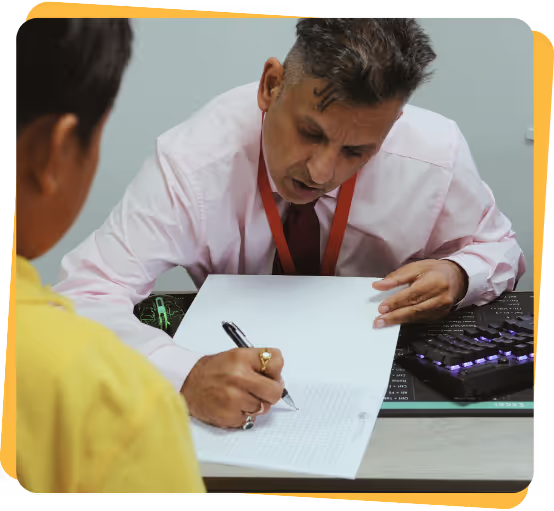
Mr Singh
Founder, Pass My GCSE
Mr Singh is the founder of Pass My GCSE, with over 30 years of teaching experience. Having overcome academic setbacks himself, he is passionate about ensuring no child struggles alone. His approach focuses on personalised support, strong foundations, and building confidence. He has helped students achieve outstanding results in 11+ and GCSE examinations
Loading related posts…