Loading page…
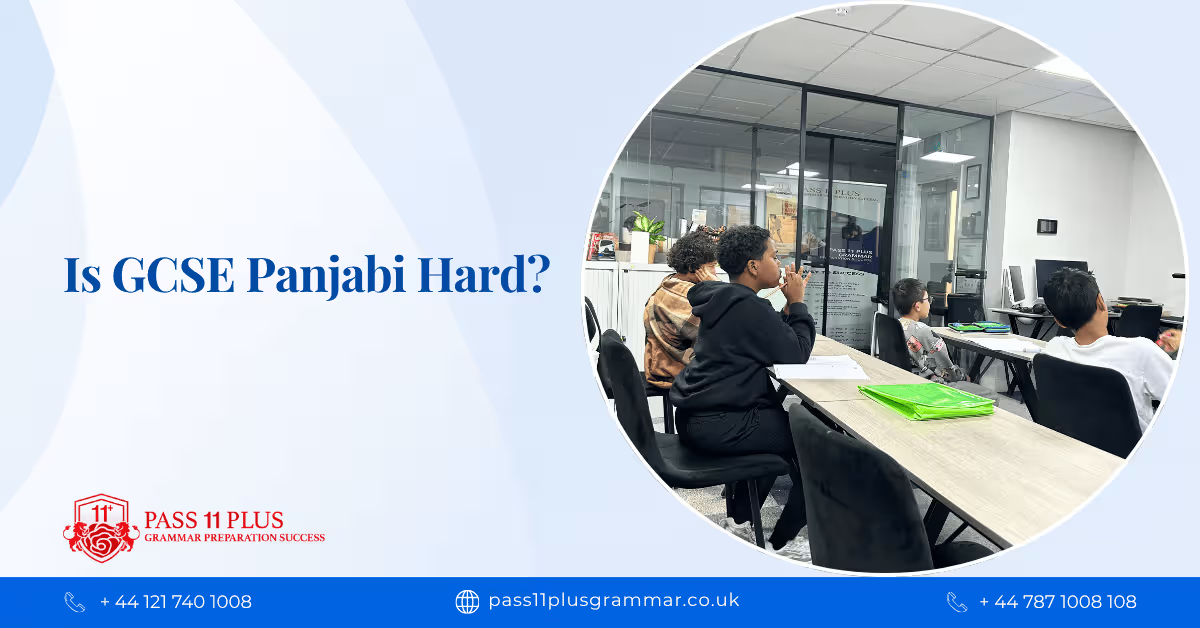
Is GCSE Panjabi Hard?
Published on
GCSE Panjabi is not considered one of the harder GCSE subjects overall, especially for students who already speak or hear Panjabi at home. That said, it still demands genuine effort across four separate skill areas: listening, speaking, reading and writing, each worth an equal share of the final grade. Students who lean only on the skills that come naturally, and skip proper practice elsewhere, often find the exam harder than it needed to be.
If you or your child are weighing up GCSE Panjabi and wondering whether it is a tough subject to take on, here is a clear, honest answer. We will walk through exactly what the exam tests, why some parts feel trickier than others, and simple ways to make passing it far more achievable.
What does GCSE Panjabi actually test?
GCSE Panjabi, set by AQA, is built around four separate skills, and each one carries exactly the same weight towards the final grade. Listening, speaking, reading and writing are each worth 25 percent, so there is no single skill a student can lean on to carry the whole result.
On top of these four papers, there is also a Spoken Language Endorsement, which is assessed separately from the main grade but still forms an important part of the overall qualification. In simple terms, GCSE Panjabi is really four mini exams rolled into one, and doing well means being genuinely solid across all of them, not brilliant at one and weak at the rest.
Is GCSE Panjabi hard compared to other GCSEs?
On the whole, GCSE Panjabi is not seen as one of the more difficult GCSE options, particularly next to subjects like GCSE Maths, GCSE Combined Science or subjects such as French and German, which are often taken by students with little prior exposure to the language at all.
A large number of students taking GCSE Panjabi grow up speaking or hearing it at home, which gives a genuine head start with listening comprehension and everyday speaking. That said, "not one of the hardest" is very different from "no effort needed". The exam still expects a proper grasp of grammar, formal vocabulary, and structured writing, which home exposure alone does not always cover.
Why some parts of GCSE Panjabi feel harder than others
There is a simple reason certain sections of this exam catch students out. The way Panjabi is spoken casually at home is often quite different from the more formal, structured Panjabi expected in exam writing and reading passages. Slang, shortened phrases and regional dialect, all completely normal at home, do not always match what examiners are looking for on paper.
Writing extended answers in properly structured Panjabi, rather than short conversational phrases
Reading unfamiliar or more literary vocabulary that rarely comes up in daily conversation
Applying grammar rules consistently, rather than relying on instinct built from listening alone
Managing timing across four separate skill areas rather than one combined paper
None of this makes GCSE Panjabi an especially hard subject overall. It simply means that comfort with spoken, everyday Panjabi does not automatically transfer into exam readiness, and that gap is exactly where focused preparation makes the biggest difference.
How GCSE Panjabi grade boundaries actually work
Like every GCSE, Panjabi is graded on the 9 to 1 scale, with grade 9 the highest and grade 4 counting as a standard pass, grade 5 as a strong pass. Grade boundaries, the exact number of marks needed for each grade, are not fixed from one year to the next.
Once marking is complete, senior examiners review the paper carefully, considering how difficult the questions were and how the entire student cohort performed. Scaled marks are then used to adjust for paper difficulty, so a student sitting a harder paper is not unfairly disadvantaged compared to a previous year. This process exists to keep grading standards consistent over time, even as individual papers vary slightly year on year.
GCSE Panjabi tuition
Give your child the confidence to pass GCSE Panjabi
From formal writing to exam technique, our specialist tutors cover exactly what the exam demands.
How to make GCSE Panjabi easier to pass
1. Practise all four skills, not just the strongest one
Since listening, speaking, reading and writing are each worth 25 percent, uneven preparation across the four areas is the single biggest cause of a lower than expected grade.
2. Treat formal writing as its own skill
Practise writing full, structured answers in Panjabi regularly, rather than assuming conversational fluency will carry over automatically.
3. Read beyond familiar, everyday vocabulary
Working through varied reading passages helps build comfort with more formal or literary language that shows up in the exam.
4. Practise under timed conditions
Getting used to managing time across four separate papers helps avoid rushed answers on exam day.
5. Check grade boundaries after results day
Reviewing where marks were lost against the published boundaries gives a clear, honest picture for any future resit planning.
Getting the right support for GCSE Panjabi
Some students manage GCSE Panjabi comfortably with steady home practice, particularly if Panjabi is already spoken regularly at home. Others benefit hugely from more structured, expert guidance, especially when it comes to formal writing and reading, and there is nothing at all wrong with needing that extra support.
1. Work with a specialist, not a generalist
Our GCSE Panjabi tutors understand exactly where students tend to lose marks, and focus preparation squarely on those gaps rather than repeating what a student already knows.
2. Get a structured, subject-specific plan
Our GCSE Panjabi tuition is built around all four skill areas equally, so revision time reflects exactly how the exam is actually weighted.
3. Read our dedicated guide on passing the exam
For a deeper, step-by-step breakdown of revision strategy, our guide on how to pass GCSE Panjabi covers exactly what to focus on and when.
4. Look at the wider picture too
If your child is juggling Panjabi alongside other subjects, our GCSE tuition in Birmingham provides consistent, well-rounded support across the full GCSE timetable.
For more detailed guides on GCSE subjects, grade boundaries and results, our sister site Pass GCSE is entirely dedicated to GCSE preparation and results.
Whatever stage of preparation your child is at, our GCSE tuition team is here to help turn GCSE Panjabi from a source of worry into a genuine strength.
Final thoughts
So, is GCSE Panjabi hard? Not especially, but it does reward genuine, balanced preparation across all four skill areas rather than confidence in just one or two. Students with strong home exposure have a real advantage with listening and speaking, but formal reading and writing usually need dedicated, separate practice to reach their full potential.
With the right structure and support, GCSE Panjabi can go from feeling like an unpredictable subject to one of the more manageable results on results day. We would love to help your child get there with confidence. Get in touch with us today.
Frequently Asked Questions
Is GCSE Panjabi hard?
GCSE Panjabi is not considered one of the harder GCSE subjects overall, especially for students who already speak or hear Panjabi at home. It still demands genuine effort across four separate skill areas: listening, speaking, reading and writing, so students who focus only on the areas that come naturally can find the exam more difficult than expected.
What grade do you need to pass GCSE Panjabi?
GCSE Panjabi is graded on the standard 9 to 1 scale used across all GCSEs, with grade 4 counting as a standard pass and grade 5 considered a strong pass. Grade boundaries are set after marking each year, based on how the whole cohort performed.

Mr Singh
Founder, Pass 11 Plus Grammar
Mr Singh is the founder of Pass 11 Plus Grammar, with over 30 years of teaching experience. Having overcome academic setbacks himself, he is passionate about ensuring no child struggles alone. His approach focuses on personalised support, strong foundations, and building confidence. He has helped students achieve outstanding results in 11+ and GCSE examinations
Loading related posts…