Loading page…
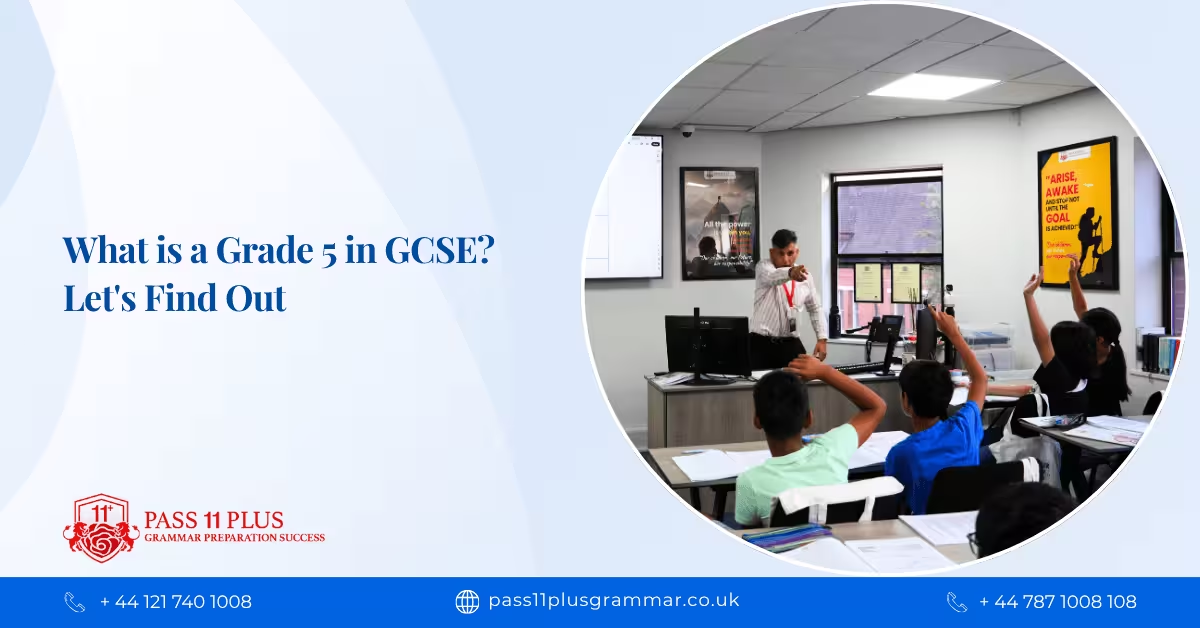
What is a Grade 5 in GCSE? Let's Find Out
Published on
A grade 5 in GCSE is officially known as a strong pass. It sits one level above grade 4, the standard pass, on the 9 to 1 grading scale used across England since 2017. There is no single exact letter equivalent for grade 5 under the old system, but is a grade 5 good in GCSE? Genuinely, yes. It is widely considered to sit between a high grade C and a low grade B, and it is the benchmark most sixth forms and colleges look for in English and maths before accepting a student onto academic A-level courses.
A grade 4 gets called a pass. A grade 7 gets called strong. But grade 5 sits in a slightly confusing middle ground that trips up plenty of parents. Here is a clear, honest answer to what a grade 5 is in GCSE.
What does grade 5 mean in GCSE?
Since 2017, GCSEs in England have used a numbered grading scale from 9 to 1, replacing the old A* to G letter system. Grade 9 sits at the very top, and grade 1 at the bottom, with U meaning ungraded.
Within this scale, grade 5 has its own specific, official label. According to government guidance published by Ofqual, grade 4 is described as a standard pass, while grade 5 is described as a strong pass. This distinction matters, since it means the system actually recognises two different levels of passing a GCSE, not just one single pass or fail line.
What is grade 5 equivalent to in the old GCSE grades?
Official government guidance confirms three clear anchor points between the two systems. The bottom of grade 7 lines up with the bottom of the old grade A. The bottom of grade 4 lines up with the bottom of the old grade C. The bottom of grade 1 lines up with the bottom of the old grade G. Notice that grade 5 is not one of these official anchor points.
So what is a 5 GCSE equivalent to in old grades? Since grade 5 sits between the grade 4 anchor point (bottom of C) and the grade 7 anchor point (bottom of A), it is widely understood to represent somewhere between a high grade C and a low grade B under the old system. This is the standard, commonly used comparison, even though the government's own guidance stops short of giving grade 5 one single, exact letter equivalent.
This gap is not an oversight. It reflects a deliberate design choice. Three number grades, 9, 8 and 7, now cover ground that used to be squeezed into just two letter grades, A star and A. The same kind of extra detail was built in around the old B and C boundary too, which is exactly why grades 5 and 6 exist as a pair rather than grade 5 mapping cleanly onto a single old letter.
Is grade 5 good in GCSE?
Yes, genuinely. A grade 5 is a strong, respectable result, and parents comparing it unfavourably to memories of an old grade B or C are often underselling what it actually represents.
Is a grade 5 good in GCSE compared to the very top grades? It is not a 7, 8 or 9, and it will not open every single door that the highest grades do, particularly for the most competitive university courses. But taken on its own terms, a grade 5 represents genuinely solid, above average performance, not a result to feel disappointed by.
Grade 4 vs grade 5
Understanding the practical difference between these two grades helps explain why so many families pay close attention to which side of the line a result falls on.
Grade 4, standard pass
The government's official minimum benchmark
Accepted by most employers and further education providers
Required to avoid continued compulsory study in that subject to age 18
Grade 5, strong pass
Often specifically required by sixth forms in English and maths
Signals stronger, more secure understanding than grade 4
Increasingly a preferred benchmark for competitive courses
Both grades genuinely count as a pass. The real difference lies in how selective a school or course is prepared to be, and grade 5 simply clears a noticeably higher bar than grade 4 does.
How many students actually get a grade 5?
In recent years, just over half of GCSE entries nationally have achieved a grade 5 or above, though this figure varies by subject and by year, and tends to sit a little lower in core subjects like English and maths specifically than across all subjects combined.
Why grade 5 matters for sixth form, college and beyond
Grade 5 shows up as a genuine gatekeeper at several important decision points beyond GCSEs themselves.
Sixth form and college entry: Many institutions ask specifically for grade 5 or above in English and maths, even where other subjects are accepted at grade 4.
A-level subject choices: Some subjects, particularly more academically demanding ones, look for grade 5 or 6 in the equivalent GCSE before allowing a student to continue it at A-level.
University applications: While A-level results carry far more weight, some universities and competitive courses do look at GCSE profiles, where a strong spread of grade 5s and above helps.
Apprenticeships and employment: Some more competitive apprenticeship schemes and graduate style employer programmes specify grade 5 or above, rather than the standard grade 4 minimum.
How grade boundaries affect what counts as a grade 5
It is worth knowing that there is no fixed percentage score attached to grade 5, or to any GCSE grade. Exam boards set new grade boundaries after every series, based on how difficult that year's papers were and how the whole national cohort performed, so that the standard of work required for a grade 5 stays consistent year on year, even though the exact mark needed shifts slightly.
GCSE tuition
Turn a solid GCSE grade 4 into a genuine strong pass
Our GCSE tutors build the exact understanding and technique needed to reach, and beat, a grade 5.
How Pass 11 Plus Grammar helps your child reach, or beat, a grade 5
1. Focused revision on genuine understanding, not memorisation alone
Grade 5 and above questions increasingly reward applying knowledge to unfamiliar situations, not just recalling a fact or method.
2. Practise with genuine past papers under timed conditions
Seeing exactly how marks are awarded, and where they are commonly lost, helps target revision far more precisely than generic study alone.
3. Prioritise English and maths specifically
Since grade 5 in these two subjects is so often the specific benchmark sixth forms ask for, they deserve particular attention if a student is close to the line. Our GCSE Maths tuition and GCSE English tuition are both built around exactly this kind of targeted, mark scheme aware preparation.
4. Get focused, structured support where it counts most
A tutor who understands exactly where a student sits against the grade 5 boundary can build a plan around closing that specific gap. Our GCSE Science tuition follows the same principle across biology, chemistry and physics.
For wider GCSE guides and grade specific revision advice, Pass GCSE is entirely dedicated to GCSE preparation.
If your family is nearby, our GCSE tuition in Birmingham would love to help build exactly this kind of focused, confident preparation, whatever grade your child is currently working toward.
Final thoughts
So, what does grade 5 mean in GCSE? It means a strong pass, sitting confidently above the standard pass at grade 4, and broadly comparable to somewhere between a high old grade C and a low old grade B. It is the benchmark many sixth forms specifically look for in English and maths, and it places a student among the stronger half of their national cohort.
Whether your family is aiming to secure a first grade 5, or push toward the grades above it, understanding exactly what the number represents takes a good deal of unnecessary confusion out of results day. We would love to help your child get there with genuine confidence. Get in touch with us today.
Frequently Asked Questions
What is a grade 5 in GCSE?
A grade 5 in GCSE is officially known as a strong pass. It sits above grade 4, the standard pass, and is the grade many sixth forms and colleges ask for in English and maths before accepting a student onto A-level courses.
Is grade 5 good in GCSE?
Yes, a grade 5 is a genuinely good result. It is officially classed as a strong pass, one level above the standard pass at grade 4, and it is the benchmark most sixth forms look for in English and maths before offering a place on academic A-level courses.
What is a 5 GCSE equivalent to in old grades?
A grade 5 is generally considered equivalent to somewhere between a high grade C and a low grade B under the old A star to G system. The government's official guidance does not give grade 5 an exact single letter equivalent, since the new scale was deliberately designed to spread this range across two grades, 5 and 6, rather than one.

Mr Singh
Founder, Pass 11 Plus Grammar
Mr Singh is the founder of Pass 11 Plus Grammar, with over 30 years of teaching experience. Having overcome academic setbacks himself, he is passionate about ensuring no child struggles alone. His approach focuses on personalised support, strong foundations, and building confidence. He has helped students achieve outstanding results in 11+ and GCSE examinations
Loading related posts…