Loading page…
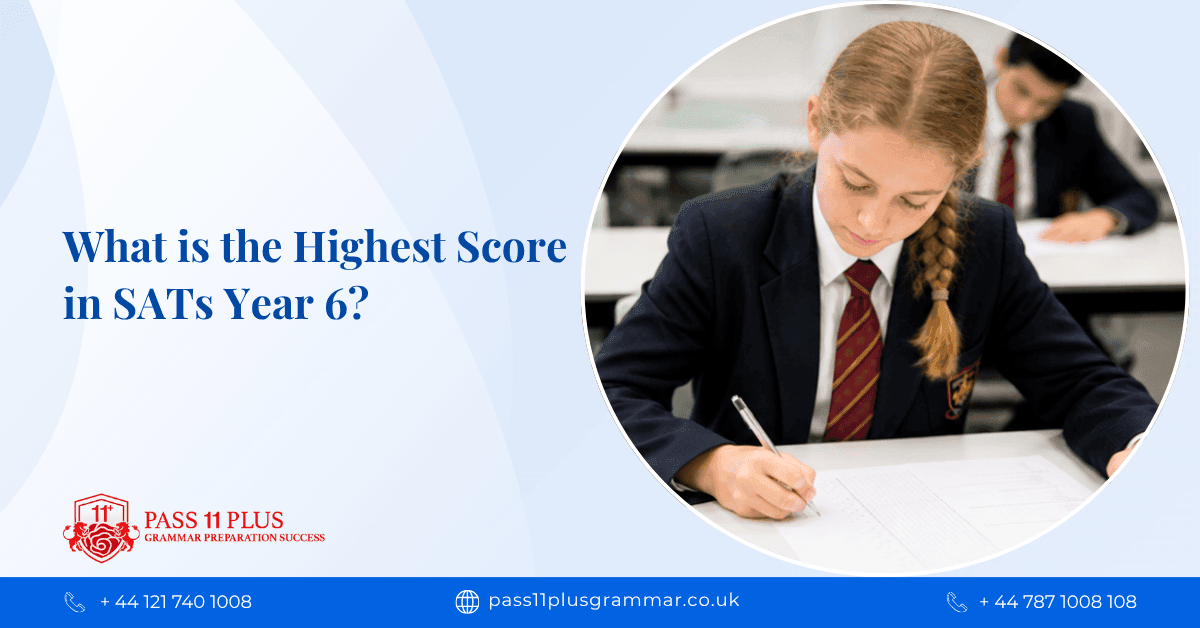
What is the Highest Score in SATs Year 6?
Published on
SATs results can feel confusing at first. Scaled scores, raw scores, expected standards, what does it all mean? This guide explains everything in plain, simple language so you know exactly what your child's score means and what to aim for.
The highest possible score in Year 6 SATs is 120. This is the top of the scaled score range, which runs from 80 (lowest) to 120 (highest). A score of 100 or above means your child has met the government's expected standard. A score of 110 or above shows they are working at greater depth. The national average scaled score in reading in 2025 was 106, the highest it has ever been.
What are Year 6 SATs?
SATs stands for Standard Assessment Tests. They are national exams taken by every child in Year 6 at the end of primary school, usually in May of each year. They are set and marked externally by the Standards and Testing Agency (STA).
The tests cover three subjects: reading, maths, and grammar, punctuation and spelling (GPS). Writing is not tested by a formal SATs paper; instead, it is assessed by your child's teacher throughout the year.
The purpose of SATs is to show whether your child is meeting the government's expected standard for a Year 6 pupil. They are also used to measure how schools are performing nationally. Results are sent home with your child's end-of-year report, usually by the end of July.
What is the highest score in Year 6 SATs?
According to official UK government guidance, the highest scaled score that can be awarded in KS2 SATs is 120. This applies to all three tested subjects: reading, maths, grammar, punctuation and spelling.
Achieving a score of 120 means your child answered almost all the questions correctly and is performing at the very top of their year group nationally. It is an excellent result, though it is worth knowing that a score anywhere above 100 already means your child has exceeded the expected standard.
The full SATs score scale explained
Here is what every point on the Year 6 SATs score scale means, from top to bottom.
120 (Highest possible score) - The maximum scaled score achievable. Very rare. Means your child answered almost every question correctly.
110+ (Greater depth) - Working well above the expected standard for Year 6. Schools generally consider 110 or above as greater depth. In 2025, around 26% of children reached this level in maths and 30% in GPS.
100 (Expected standard) - Meeting the government's expected standard for a Year 6 child. A score of exactly 100 means your child is exactly where the government expects them to be at this age.
80-99 (Working towards) - The child has not yet met the expected standard. A score of 80 is the lowest that can be awarded. These children may benefit from extra support as they move into secondary school.
80 (Lowest possible score) - The minimum scaled score. Below this, children receive a code rather than a score, indicating they have not demonstrated sufficient understanding of the KS2 curriculum.
Year 6 SATs Tuition
Help your child reach the score they deserve
Our expert tutors build real confidence in Reading, Maths and GPS - so your child walks into their SATs papers fully prepared.
Raw score vs scaled score - What is the difference?
This is one of the most common points of confusion for parents. Your child's SATs result goes through two stages before you see it.
The raw score
The raw score is simply the total number of marks your child earned in their test papers. For example, if the maths SATs paper had 110 marks available and your child scored 78, their raw score is 78. This is the number you would see if you counted up every correct answer on every paper.
The scaled score
The raw score is then converted into a scaled score using a conversion table published by the STA each year. This conversion does two important things. First, it puts every child's result onto the same 80 to 120 scale, regardless of how many total marks were available on the paper. Second, it adjusts for any small differences in difficulty between this year's paper and previous years, so that results can be compared fairly across different cohorts.
1. Your child sits the SATs papers in May
Three subjects are tested with multiple papers: maths (3 papers), reading (1 paper) and GPS (2 papers). All are externally marked.
2. Marks are added up to give a raw score
The raw score for each subject is the total number of marks earned across all relevant papers for that subject.
3. Raw scores are converted to scaled scores
The STA publishes conversion tables each year. Your child's raw score is looked up in the relevant table and converted to a scaled score between 80 and 120.
4. Schools share results with parents
Results arrive at schools by the end of July and are usually included with your child's end-of-year report. You will typically be told your child's scaled score and whether they met the expected standard (code AS) or did not (code NS).
Highest score by subject - Maths, Reading and GPS
The highest possible scaled score is 120 in every subject. However, the number of raw marks needed to achieve each scaled score differs by subject. Here is an overview of the three tested subjects.
Subject | Papers | Highest scaled score | Expected standard raw score (2025) |
Maths | 3 papers (arithmetic, reasoning x2) | 120 | 58 out of 110 |
Reading | 1 paper | 120 | 28 out of 50 |
Grammar, Punctuation and Spelling (GPS) | 2 papers (grammar and spelling) | 120 | 35 out of 70 |
What is the highest score in SATs Year 6 maths?
The highest scaled score in Year 6 SATs maths is 120. The maths SATs consists of three papers: Paper 1 tests arithmetic, while Papers 2 and 3 test reasoning. All three papers are taken in the same week. The raw marks from all three papers are combined and then converted into a single scaled score between 80 and 120. In 2025, 26% of pupils reached greater depth (110 or above) in maths.
What is a good SATs score?
A "good" SATs score is different for every child. Here is a straightforward way to think about it.
100 or above means your child has met the government's expected standard. This is the baseline target for all Year 6 pupils.
105 or above means your child is performing above the national average for 2025.
110 or above is considered greater depth - well above the expected standard and a strong result.
115 to 120 is an exceptional result, placing your child in the top tier of their year group nationally.
How to help your child aim for a higher SATs score
Whether your child is working towards the expected standard or aiming for greater depth, there are clear, practical things you can do to support them.
1. Build daily reading habits
Regular reading is the single most effective preparation for the reading SATs paper and also builds vocabulary for GPS. Just 15 to 20 minutes of reading every day across a range of genres makes a measurable difference over time.
2. Keep times tables sharp
Secure times tables knowledge directly improves performance on the arithmetic paper. Children who know their tables to 12x12 confidently will always complete Paper 1 faster and with fewer errors than those who are still working them out.
3. Practise with past papers
Timed practice under real conditions helps your child get used to the pace of the exam and identify any remaining gaps. Our free 11+ practice papers are a great starting point for building familiarity with the question formats before sitting the real thing.
4. Focus on GPS vocabulary
Grammar, punctuation and spelling are the subjects where targeted revision makes the biggest difference in a short time. Learning the correct terminology, subordinate clause, relative clause, and modal verb, and practising their use regularly, leads to noticeable improvement.
5. Work with a specialist tutor
A tutor who knows the KS2 curriculum and SATs format can identify exactly where your child is losing marks and help them close those gaps efficiently. Our 11 plus tutors have extensive experience supporting children across both SATs and 11 plus preparation, giving your child a strong foundation for both.
6. Consider a summer intensive
If your child has a specific target or is sitting the 11 plus in September, the summer before Year 6 is an ideal time for a focused boost. Our 11 plus summer courses cover core English and maths skills alongside 11 plus specific topics, giving your child a strong start to Year 6 on all fronts.
And if your child is also preparing for selective secondary schools, do not forget our 11 plus mock exams, which help build exam technique and confidence across both SATs and 11 plus style questions.
Final thoughts
The highest score in Year 6 SATs is 120, but the score that really matters is the one that shows your child is on track for their age. Anything above 100 means they have met the expected standard. Anything above 110 shows they are working at greater depth. And in 2025, the national averages sat at around 105 to 106, so a score in that range puts your child comfortably above the national middle.
At Pass 11 Plus Grammar, we help children build the English and maths foundations that underpin strong SATs performance and beyond. Whether your child is preparing for SATs, the 11 plus, or both, we have the right support ready for where they are right now.
Pass 11 Plus Grammar Services Near You:
Frequently Asked Questions
What is the highest scaled score in SATs?
The highest scaled score in KS2 SATs is 120. This applies to Reading, Maths, Grammar, Punctuation and Spelling.
What does 115 mean in SATs?
A scaled score of 115 in SATs means your child is performing well above the expected standard for Year 6. Scores of 110 and above are generally considered to indicate greater depth, so a score of 115 places your child comfortably in the higher tier of national performance, well above both the expected standard of 100 and the national average.
Is 99 a fail in SATs?
A scaled score of 99 means your child has not met the government's expected standard, which requires a score of 100 or above. However, it is worth remembering that SATs are not a pass or fail exam in the traditional sense; a score of 99 means the child is considered to be "working towards" the expected standard, not that they have failed, and it simply indicates they may benefit from a little extra support as they move into secondary school.

Mr Singh
Founder, Pass 11 Plus Grammar
Mr Singh is the founder of Pass 11 Plus Grammar, with over 30 years of teaching experience. Having overcome academic setbacks himself, he is passionate about ensuring no child struggles alone. His approach focuses on personalised support, strong foundations, and building confidence. He has helped students achieve outstanding results in 11+ and GCSE examinations
Loading related posts…