Loading page…
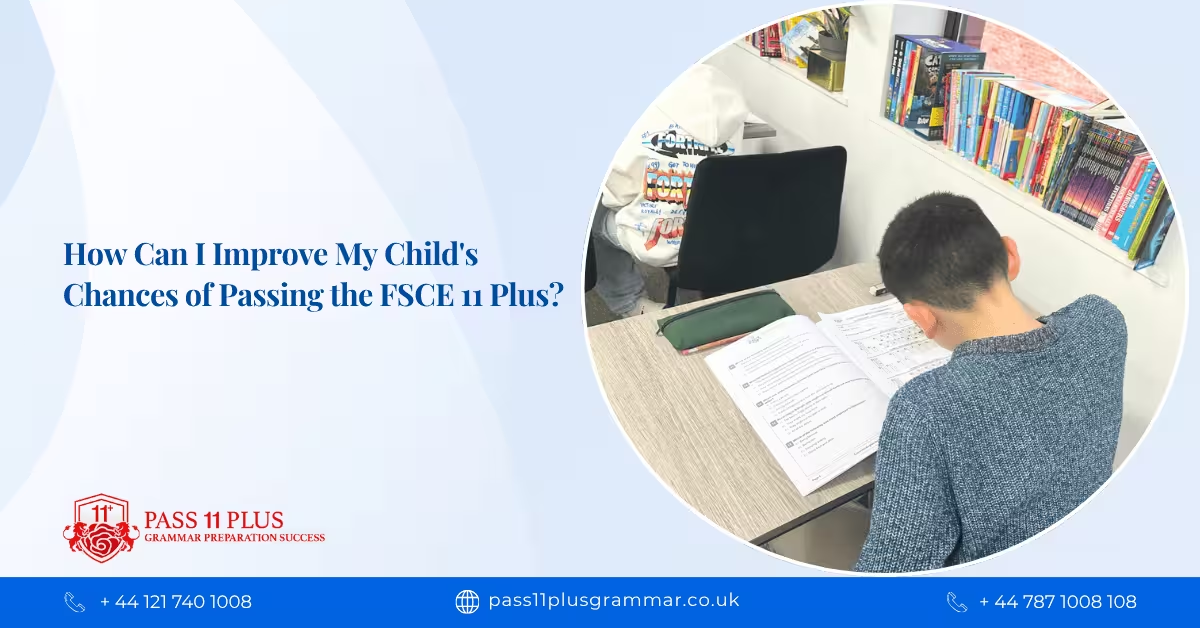
How Can I Improve My Child's Chances of Passing the FSCE 11 Plus?
Published on
The most effective ways to improve your child's chances are: build deep understanding of the Year 5 KS2 curriculum in English and maths, not just surface familiarity; read widely every day to develop vocabulary, comprehension and inference skills; practise creative writing regularly with planning time built in; use timed practice papers to build pace and exam familiarity; check your target school's specific format before starting preparation; and start in Year 4 or early Year 5 so your child has time to build genuine understanding rather than rush it.
The FSCE 11 plus is different from most other grammar school entrance exams. It does not test verbal reasoning or non-verbal reasoning. It tests how well your child can apply what they have already been taught at school. That distinction changes everything about how you prepare, and it is where most families either gain or lose ground.
What the FSCE 11 plus actually tests
Before looking at preparation strategies, it helps to understand what the FSCE is designed to test. The exam is not simply about how much your child can remember. It is about how well they can apply what they know in a new or unfamiliar situation.
This is a meaningful distinction. A child who has been drilled on fraction rules but does not really understand fractions will struggle when a fraction question is presented in an unusual format. A child who genuinely understands fractions, because they have been taught well and have practised applying that knowledge in different contexts, will handle the same question with confidence.
English
Accurate reading and inference
Precise and varied vocabulary
Clear written communication
Grammar and punctuation accuracy
Awareness of audience and purpose
Maths
Secure calculation skills
Multi-step problem-solving
Applying knowledge in new contexts
Fractions, decimals and percentages
Geometry, measure and statistics
Creative Writing
Planning before writing
Clear structure and paragraphing
Ambitious, precise vocabulary
Sentence variety and control
Originality and imagination
Wider KS2 (some schools)
Science, geography and history
Adaptable, flexible thinking
Applying knowledge across subjects
Reading maps and interpreting data
Explaining ideas clearly in writing
No authorised FSCE past papers exist. FSCE publishes familiarisation guides for each school showing the format and sample questions. Preparation should focus on building strong KS2 knowledge across English and maths and practising creative writing, rather than searching for FSCE-specific past papers that claim to be official. Always use your target school's published familiarisation guide as the starting point for understanding the exact format.
6 ways to improve your child's chances of passing the FSCE 11 plus
1. Check your target school's exact format first
The FSCE format is not identical across all schools. Some use two papers. Others use three. Reading School uses four named papers that draw on a wider range of KS2 subjects. Some schools' English papers include grammar and punctuation. Others focus more heavily on comprehension and vocabulary.
The single most important first step is downloading the familiarisation guide published by your target school and reading it carefully. This tells you exactly what papers your child will sit, what subjects are tested and what the response formats look like. Preparation built on the wrong format wastes time that could be spent on content that actually matters for your school.
Where to find the familiarisation guide
Check the admissions section of your target grammar school's website. Most FSCE schools publish their guide directly. The FSCE website also holds copies for each participating school.
2. Build deep KS2 knowledge, not just surface familiarity
This is the most important distinction in FSCE preparation and the one most families miss. Doing lots of practice questions without really understanding the underlying concept produces surface familiarity. It helps when a question looks familiar. It falls apart when the question is presented slightly differently.
Deep knowledge means your child can explain why an answer is correct, not just which answer to circle. It means they can use a maths concept in a word problem they have never seen before. This kind of understanding takes more time to build than rote recall, which is exactly why starting early in Year 4 or Year 5 makes such a significant difference. Our 11 plus tuition is built around genuine understanding from the very first session, not just drilling question types.
3. Read widely every day, the single biggest lever for English
The FSCE English papers reward vocabulary range, comprehension accuracy, inference skills and grammar instinct. All four of these are built most effectively through reading, not through grammar worksheets. A child who reads for 15 minutes every day across a variety of text types absorbs vocabulary, sentence structures and ideas that show up directly in their performance on comprehension passages.
Mix fiction and non-fiction. Try different genres: history books, science books, stories set in different times and places, quality newspapers. When your child reads, talk about it. Ask what a word means. Ask what the author was trying to convey. Ask what they think will happen next. These conversations build inference skills more effectively than any comprehension exercise. At Pass 11 Plus Grammar, our 11 plus tutors treat reading habit as foundational for every child preparing for the FSCE English papers.
4. Practise creative writing regularly, with planning time always built in
The FSCE creative writing paper rewards planning, structure, precise vocabulary and originality. The exam gives your child time to plan before they write. That planning time is not marked, only the writing on the answer sheet counts, but children who use it consistently produce far stronger work than those who dive straight in.
Practise at home in the same way. Give your child a prompt. Give them five minutes to plan. Then give them 20 to 25 minutes to write. Afterwards, read the piece together and ask: where is the strongest image? Where could the vocabulary be more precise? Where does the structure feel unclear? This feedback loop: writing, reading back, specific improvement, is what builds creative writing performance over time.
Remember the two-stage rule
The creative writing paper is only assessed for children who meet the eligible score on the academic papers. Strong English and maths performance in Papers 1 and 2 must come first.
5. Practise under timed conditions well before the exam
The FSCE exam lasts around two to two and a half hours, with instructions delivered via a pre-recorded audio track. The format is consistent and well-structured, but it is unfamiliar to most children until they have experienced it. Children who have never worked under timed exam conditions often find the pace harder to manage on the day than the content.
Introduce timed practice sessions from at least six months before the exam. Start with individual sections, then move to full timed papers as the exam approaches. Our free 11 plus practice papers cover English and maths at the level directly relevant to the FSCE, and our 11 plus mock exams replicate real exam conditions with section timings and detailed performance feedback so you always know which areas to target next.
6. Use the summer productively, the exam arrives quickly in September
The FSCE exam typically takes place in the first few weeks of September, making the summer holidays the most important preparation window of the entire year. This does not mean six weeks of intensive cramming, that approach tends to exhaust children and increase anxiety rather than improve scores. It means focused, structured preparation across all the tested subjects, with daily short sessions that build pace and confidence before the new school year begins.
Our 11 plus intensive summer course gives your child expert-led preparation across English, maths and creative writing throughout the summer, with timed practice built in from the very first session so that exam conditions feel familiar and manageable by September.
Does passing the FSCE guarantee a grammar school place?
No. Achieving a qualifying score makes your child eligible to apply, but each school applies its own oversubscription criteria when demand exceeds the number of places. These criteria typically include catchment area, siblings already at the school, Pupil Premium eligibility and sometimes distance from the school. Always read your target school's full admissions policy before deciding which schools to list on your common application form.
Final thoughts
Improving your child's chances in the FSCE 11 plus is not about doing more practice questions. It is about building the kind of deep, flexible understanding that holds up when the question looks slightly different from what your child has seen before. Read every day. Build maths knowledge properly. Practise creative writing with planning time. Use timed papers to build pace. And check the specific format for your target school so that preparation is always focused on what actually matters.
Start early, work consistently and treat every session as a chance to build genuine understanding rather than surface familiarity. That approach is what produces real results in the FSCE 11 plus.
Frequently Asked Questions
How can I improve my child's chances of passing the FSCE 11 plus?
The most effective ways are: build deep, secure knowledge of the Year 5 KS2 curriculum in English and maths; read widely every day to develop vocabulary, comprehension and inference skills; practise creative writing regularly with planning time built in; use timed practice papers to build pace and exam familiarity; check your target school's specific format before starting; and start in Year 4 or early Year 5 so your child has time to build genuine understanding rather than surface familiarity.
Does passing the FSCE guarantee a grammar school place?
No. Achieving a qualifying score makes your child eligible to apply, but each school uses its own oversubscription criteria when more children qualify than there are places available. These criteria typically include catchment area, siblings, Pupil Premium eligibility and distance. Always read your target school's admissions policy carefully before deciding which schools to list on your application form.

Mr Singh
Founder, Pass 11 Plus Grammar
Mr Singh is the founder of Pass 11 Plus Grammar, with over 30 years of teaching experience. Having overcome academic setbacks himself, he is passionate about ensuring no child struggles alone. His approach focuses on personalised support, strong foundations, and building confidence. He has helped students achieve outstanding results in 11+ and GCSE examinations
Loading related posts…