Loading page…
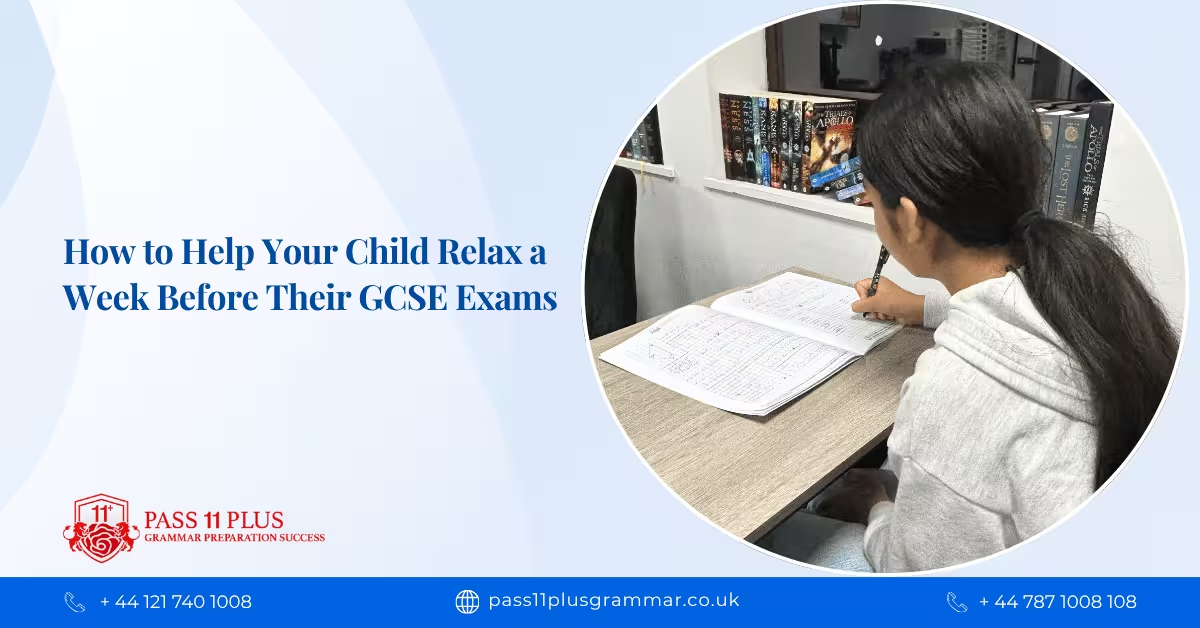
How to Help Your Child Relax a Week Before Their GCSE Exams
Published on
The most effective way to help your child relax the week before their GCSE exams is to keep a realistic, balanced revision schedule, build in genuine breaks and time for things they enjoy, and encourage regular movement; exercise is great for clearing the mind and easing stress during exam season. Protect sleep and regular meals as much as you can, and talk openly without constantly raising the subject of exams yourself. Calm, honest reassurance, letting your child know you are proud of their effort regardless of the outcome, tends to help far more than pressure or repeated reminders of how much is riding on the results.
GCSE season stretches over weeks, not a single morning, which makes staying calm even harder to manage. Here are genuine, evidence based ways to help your teenager feel steadier and more like themselves, without adding extra pressure of your own.
Why the final week before GCSEs feels different from ordinary revision
GCSEs are not a single exam. They are a stretch of several weeks, often with multiple papers in the same week, which makes the run up genuinely different from preparing for one big test on one single day.
By the final week before exams properly begin, most of the heavy lifting is already done. What matters most now is protecting the knowledge already built, and just as importantly, protecting your teenager's energy, sleep and general sense of calm going into a demanding few weeks ahead.
Keep a realistic revision schedule, not a punishing one
To prepare for exams, specifically make a realistic revision schedule, work out how much there genuinely is to do and the time available, then break it down into manageable chunks rather than one overwhelming block.
If your child is working through GCSE Maths, English, Science or a language, structured, focused sessions genuinely beat long, unfocused ones. Our GCSE Maths tuition and GCSE English tuition are both built around exactly this kind of realistic, well paced structure, rather than piling on pressure in the final stretch.
Build in real breaks and time for things they enjoy
Study breaks should include things your child actually enjoys, listening to music, playing a game, or simply doing something creative like drawing or making up songs to help revision feel less draining.
Listening to music, a podcast, or something genuinely relaxing between sessions
Cooking, drawing, playing with a pet, or any low pressure creative activity
Time with friends, whether revising together or simply taking a proper break from it
At least one full day a week completely free from revision, as the NHS recommends
Taking regular breaks to go for a run with a friend helps focus better and feel less alone during exam season, a genuinely useful reminder that rest is not wasted time, it is part of what makes the revision itself work.
Get them moving: why exercise genuinely helps
Physical activity is a way to boost energy levels, clear the mind and relieve stress during exam season. It does not matter what form it takes; walking, cycling, swimming, football and dancing are all effective, and activities involving other people can be particularly helpful.
Encouraging even short bursts of activity between revision sessions, a walk around the block, a quick kickabout, or stretching at the end of the day, can make a genuine difference to how your teenager copes with the weeks ahead.
Protect sleep and food, especially this close to exams
A balanced diet is vital for a teenager's health and genuinely helps them feel well throughout exam periods. Sleep matters just as much, and both are easy to let slip when revision feels urgent.
Consistent bedtimes across the whole exam period, rather than only the night before each paper, help far more than one early night squeezed in at the last minute. Similarly, regular, proper meals, rather than skipped lunches or late night snacking under pressure, support both concentration and mood during a genuinely demanding stretch of weeks.
Talk, don't just check in, on your child's terms
It is a natural instinct to want to ask constantly how revision is going, but many teenagers actually prefer to raise exam worries in their own time, rather than being asked about it repeatedly.
When your child does want to talk, listening properly and avoiding criticism matters more than offering solutions. Sometimes they simply need to be heard, not fixed.
GCSE tuition
GCSE confidence built gently, not through pressure
Our GCSE tutors focus on calm, encouraging preparation, so your teenager walks into exam season feeling ready, not overwhelmed.
What to say, and what to avoid, before and after each exam
The words around each individual exam matter almost as much as the weeks of preparation beforehand.
Moment | What genuinely helps |
Before an exam | Be reassuring and positive. Let them know that a disappointing result is not the end of the world, and that resits are usually possible. |
After an exam | Encourage them to talk it through, focusing on what went well rather than dwelling on the questions they found difficult. |
Between exams | Help them draw a line under one exam and move on, rather than replaying it while preparing for the next. |
Small, planned treats, a favourite meal, or something to look forward to once a particularly tough exam is behind them, can also genuinely help mark progress through what is otherwise a long, demanding stretch of weeks.
Signs your child might need extra support
Most exam nerves are a completely normal part of this stage of school life, but it is worth knowing what genuinely warrants a closer look. Seek extra support if your child's anxiety or low mood is severe, persists, or interferes with their everyday life.
Not sleeping or eating properly over a sustained period
Withdrawing from friends, hobbies or things they usually enjoy
Ongoing headaches or stomach pains with no clear physical cause
Seeming persistently low, tense, or simply not themselves
This is a sensitive area, and getting the right support early matters far more than trying to manage everything alone.
How Pass 11 Plus Grammar helps GCSE students feel calm and ready, not just prepared
Genuine exam readiness has always meant more than content knowledge to us. Our approach to GCSE tuition is built on patient, encouraging teaching, where mistakes are treated as a normal part of learning rather than something to feel anxious about.
Our tutors take real care to build confidence steadily over the course, so that by the time exam season arrives, a student's preparation already includes plenty of calm, low pressure practice, not just last minute drilling under stress. Whether it is GCSE Science tuition or GCSE Languages tuition, every subject is taught with the same gentle, steady pace, so students build genuine understanding rather than fragile, pressure dependent knowledge.
If your family is nearby, our GCSE tuition in Birmingham would love to support your teenager with exactly this kind of calm, patient guidance, right through exam season and beyond. For wider GCSE guides and revision advice, our sister site Pass GCSE is entirely dedicated to GCSE preparation.
Final thoughts
The week before GCSE exams begin is not the moment for more pressure or more cramming. It is a week to protect balance, rest and the confidence your child has already built through months of steady work. Realistic scheduling, genuine breaks, regular movement, protected sleep, and calm, honest conversation all do far more good than pushing harder in these final days.
Whatever the exams bring, your teenager's effort and character will not change. We would love to help your family feel calm and genuinely ready, right through this demanding stretch of the school year.
Frequently Asked Questions
How can I help my child relax the week before their GCSE exams?
Keep a realistic, balanced revision schedule rather than trying to cram everything in, build in genuine breaks and time for things they enjoy, encourage regular exercise, and protect sleep and meals as much as possible. Talking openly, without constantly checking in about exams, and offering calm reassurance rather than pressure, all make a real difference too.
How much revision should my child do the week before GCSEs?
A few focused hours a day, broken into manageable chunks with proper breaks, tends to work far better than long, unbroken sessions. Mix subjects to avoid boredom and build in at least one full day off revision each week, even during exam season.
Does exercise really help with GCSE exam stress?
Yes, physical activity is a way to boost energy, clear the mind and relieve stress during exam season. Walking, cycling, swimming or any activity your child enjoys can help, and activities involving other people can be particularly helpful for easing pressure.
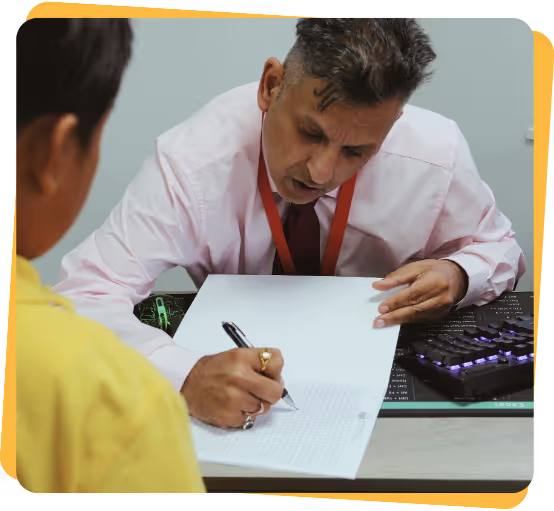
Mr Singh
Founder, Pass 11 Plus Grammar
Mr Singh is the founder of Pass 11 Plus Grammar, with over 30 years of teaching experience. Having overcome academic setbacks himself, he is passionate about ensuring no child struggles alone. His approach focuses on personalised support, strong foundations, and building confidence. He has helped students achieve outstanding results in 11+ and GCSE examinations
Loading related posts…