Loading page…
Kent Test 11 Plus: Dates, Format and How to Prepare

Published on
Are you thinking about applying to a grammar school in Kent? This guide covers everything you need to know about the Kent Test - what it involves, the 2026 key dates, how scoring works, what the pass mark is, and how to help your child prepare.
What is the Kent Test?
The Kent Test is the 11 plus exam used by all 32 grammar schools in the Kent County Council area. It is provided by GL Assessment and takes place in September of Year 6. Your child only needs to sit it once, regardless of how many Kent grammar schools you are applying to. The pass mark is a total score of 332 or above, with no single subject score below 106.
The test is designed to identify children working in the top 25% of their year group. In 2024, more than 16,000 children sat the Kent Test for around 5,600 available grammar school places. It is a competitive process, and preparation matters.
Children born between 1st September 2015 and 31st August 2016 are eligible to sit the Kent Test in September 2026 for entry to Year 7 in September 2027.
Which schools use the Kent Test?
All 32 grammar schools in the Kent County Council area use the Kent Test. Here is the full list:
Barton Court Grammar School
Borden Grammar School
Chatham and Clarendon Grammar School
Cranbrook School
Dane Court Grammar School
Dartford Grammar School
Dartford Grammar School for Girls
Dover Grammar School for Boys
Dover Grammar School for Girls
Gravesend Grammar School
Highsted Grammar School
Highworth Grammar School
Invicta Grammar School
Maidstone Grammar School
Maidstone Grammar School for Girls
Mayfield Grammar School
Oakwood Park Grammar School
Queen Elizabeth's Grammar School
Simon Langton Girls' Grammar School
Sir Roger Manwood's School
The Folkestone School for Girls
The Harvey Grammar School
The Judd School
The Langton Grammar School for Boys
The Norton Knatchbull School
The Skinner's School
Tonbridge Grammar School
Tunbridge Wells Girls' Grammar School
Tunbridge Wells Grammar School for Boys
Weald of Kent Grammar School
Wilmington Grammar School for Boys
Wilmington Grammar School for Girls
Kent Test 2026 dates and registration
Getting your dates right is essential. Registration for the Kent Test opens and closes well before the exam itself, and late applications are not accepted under any circumstances.
1st June 2026: Kent Test registration opens via the Kent County Council website
1st July 2026: Kent Test registration closes. Do not miss this deadline
10th Sept 2026: Kent Test for pupils attending a Kent primary school
12th-13th Sept 2026: Kent Test weekend sitting for pupils outside Kent
15th Oct 2026: Kent Test results day. Sent by email or first-class post
31st Oct 2026: Secondary school common application form deadline
1st March 2027: National school offers day
What does the Kent Test include?
The Kent Test consists of two one-hour multiple-choice papers, both sat on the same day. Children mark their answers on separate answer sheets. There is also a creative writing exercise.
The Writing exercise
All children also complete a 40-minute creative writing task, which includes 10 minutes of planning time. This task is not marked as part of the main test. It is only used by a headteacher panel in borderline assessment cases or for appeals. Your child's writing ability does not affect their standardised score.
What does Paper 1 English cover?
Your child reads an unseen passage and answers comprehension questions. Additional questions may test vocabulary, grammar and punctuation. Question types include choosing the best word to complete a sentence, finding synonyms and antonyms, and identifying errors in sentences.
What does Paper 1 Maths cover?
The maths section tests content your child will have learned at primary school up to the start of Year 6, including:
The four operations - addition, subtraction, multiplication and division
Fractions, decimals, percentages and ratio
Geometry, including area, perimeter and measurements
Times tables and number knowledge
The questions are designed to be challenging, asking your child to apply what they know to solve different kinds of problems, not just recall facts.
What does Paper 2 Reasoning cover?
Reasoning subjects are not taught at primary school. They are included in the Kent Test to assess a child's natural potential and logical thinking ability, rather than learned knowledge.
Verbal reasoning tests how well your child can think and solve problems using words, letters and language patterns
Non-verbal reasoning tests how well your child can work with shapes, diagrams and visual sequences
Spatial reasoning tests how well your child can mentally rotate and manipulate shapes in space
How is the Kent Test scored?
After the test, answer sheets are marked electronically. The raw marks from each section are then converted into standardised age scores (SAS).
Standardisation is a statistical process that adjusts each child's score based on their exact age in years and months on the day of the test. This ensures that younger children in the year group are not at a disadvantage compared to their older classmates. A child born in August will receive a slightly larger adjustment than a child born in September.
Your child will receive three standardised scores and a total aggregate score. Here is how the scoring scale works:
Score | What it means |
141 | Highest possible standardised score in any single subject |
423 | Highest possible total aggregate score (141 x 3) |
332+ (no subject below 106) | Qualifying threshold for grammar school assessment |
100 | Average score for the year group nationally |
69 | Lowest possible standardised score |
Kent Test results - What happens on results day?
Kent Test results will be sent to parents on Thursday, 15th October 2026. If you provided an email address when you registered, results are emailed to you on that date. If you registered on paper, the result is sent by first-class post. Your child's primary school will also receive their result, so you can check with the school if you do not receive it.
Your results letter will include:
A standardised score for English
A standardised score for maths
A standardised score for reasoning
A total aggregate score
A decision of either "suitable for grammar school" or "suitable for high school"
What is the Kent Test pass mark?
To be considered for a Kent grammar school, your child needs a total aggregate score of 332 or more, with no single subject score below 106. This is the qualifying threshold that determines whether your child is assessed as suitable for grammar school.
However, reaching the qualifying score does not guarantee a place. Grammar schools in Kent are frequently oversubscribed. Passing the Kent Test means your child can be considered for any Kent grammar school you name on your common application form. The school then applies its own admissions criteria to decide who gets a place, which may include distance, sibling priority and score ranking.
How to apply for a Kent grammar school
Register for the Kent Test (1st June to 1st July 2026)
Register online through the Kent County Council website. Registration is free. Make sure you use a valid email address so results can be sent to you digitally on 15th October. Late registrations are not accepted.
Sit the Kent Test (September 2026)
If your child attends a Kent primary school, they will sit the test at their school on 10th September 2026. If they attend a school outside Kent, they will be invited to sit the test at a Kent grammar school over the weekend of 12th to 13th September 2026.
Receive results and complete your application (October 2026)
Results are sent on 15th October 2026. If your child qualifies, name your preferred grammar school or schools on your secondary school common application form and submit it to your local authority by 31 October 2026. Check each school's admissions criteria before listing.
Receive your school offer (1 March 2027)
National School Offers Day is 1st March 2027. You will be informed which secondary school your child has been offered a place at. If your preferred school is not offered, you will receive information about how to appeal.
How to prepare your child for the Kent Test
The Kent Test is designed to be challenging, but the good news is that targeted, consistent preparation makes a real and measurable difference to your child's score. Here is how to approach it.
1. Start early and build a steady routine
Start preparing in Year 5, ideally around 12 months before the September exam. Short sessions of 20 to 30 minutes every day are far more effective than long, infrequent revision sessions. Begin with curriculum content in English and maths, then introduce reasoning question types, and build up to timed practice tests as the exam approaches. Our 11 plus tuition is structured around exactly this gradual, confidence-first approach.
2. Build strong English and maths foundations first
Before introducing practice papers, make sure your child is confident in KS2 English and maths. These are the two areas tested in Paper 1 and they appear in every version of the Kent Test. Secure foundations in these subjects make everything else significantly more manageable. Download our free 11 plus practice papers to work through individual topics at your child's pace before moving on to timed tests.
3. Practise reasoning question types systematically
Verbal, non-verbal, and spatial reasoning are not taught in primary school, which means most children will encounter these question types for the first time. The key is systematic exposure to every question type, followed by regular practice under timed conditions. Because GL Assessment uses consistent, predictable question formats year after year, targeted practice in reasoning genuinely pays off.
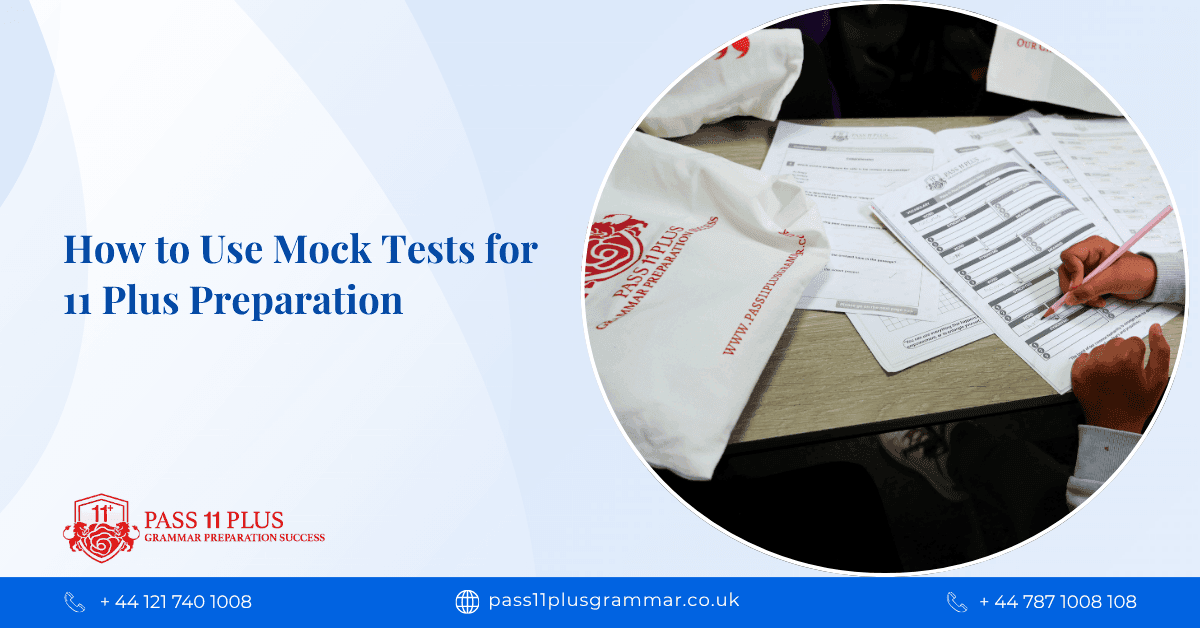
4. Introduce mock tests once content is secure
Once your child is confident with the content, introduce full timed practice papers under realistic exam conditions. This builds time-management skills, reduces exam anxiety, and helps your child feel familiar with the format on the actual day. Our 11 plus mock exams are designed to mirror the Kent Test closely, giving your child a marked breakdown of results so you always know what to focus on next.
5. Encourage daily reading
Strong reading habits underpin almost every section of the Kent Test. Encourage your child to read for 10 to 15 minutes every day across a variety of genres and styles. This builds vocabulary for verbal reasoning, comprehension skills for English and the habit of engaging deeply with unfamiliar texts.
6. Get expert support tailored to the Kent Test format
The Kent Test uses GL Assessment papers with a specific format and question style. Working with a tutor who knows this format inside out allows your child to build skills and confidence in a targeted way that self-study alone cannot replicate. Our 11 plus tutors have specific experience preparing children for the Kent Test and can provide personalised feedback and guidance at every stage of preparation. If the exam is approaching and your child needs a focused push, our 11 plus summer intensive course combines structured revision with regular timed practice in the weeks before September.
Final thoughts
The Kent Test is one of the most straightforward 11 plus processes in England. One test, one results day, 32 grammar schools. But straightforward does not mean easy. The families who succeed are almost always the ones who started early, worked consistently across all subjects, and gave their child the best possible chance through regular practice and expert guidance.
At Pass 11 Plus Grammar, we help children prepare for the Kent Test and grammar school entry across the country. Whether your child is in Year 4 and just getting started, or in Year 6 and needs a focused final push before September, we have a programme built around where they are right now.
Frequently Asked Questions
Is the Kent Test the same as the 11+?
Yes, the Kent Test is Kent's version of the 11 plus exam. It is used by all grammar schools within the Kent County Council area, and the test papers are provided by GL Assessment. The key difference is that, unlike in many other regions where different schools use different 11+ formats, your child only needs to take the Kent Test once, regardless of how many Kent grammar schools you are applying to.
How hard is it to pass the Kent Test?
It is competitive. In 2024, more than 16,000 children sat the Kent Test for around 5,600 available grammar school places, and the test is designed to select children working in the top 25% of their year group. Passing the qualifying threshold is only the first step - many grammar schools are oversubscribed and use additional criteria such as distance and score ranking to allocate places.
What is the pass mark for the Kent Test 2026?
The Kent Test pass mark for 2026 entry is a total aggregate score of 332, with no individual subject score lower than 108. The maximum possible total score is 423, and your child must meet both the aggregate threshold and the minimum score across all papers to be assessed as suitable for grammar school.

Mr Singh
Founder, Pass 11 Plus Grammar
Mr Singh is the founder of Pass 11 Plus Grammar, with over 30 years of teaching experience. Having overcome academic setbacks himself, he is passionate about ensuring no child struggles alone. His approach focuses on personalised support, strong foundations, and building confidence. He has helped students achieve outstanding results in 11+ and GCSE examinations
Loading related posts…