Loading page…
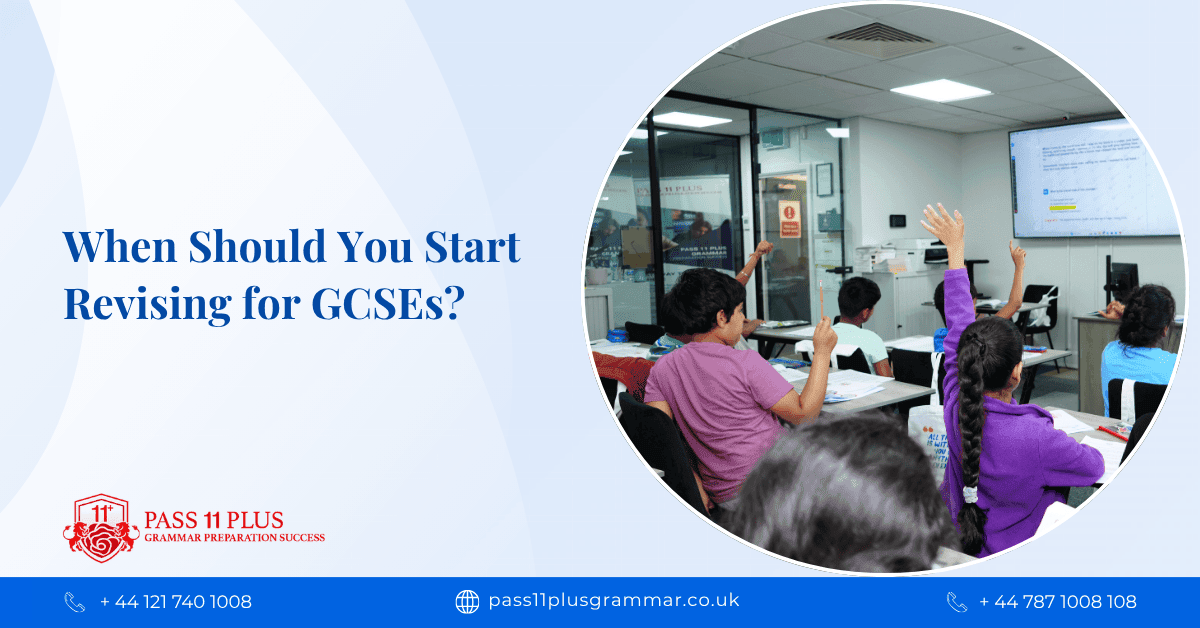
When Should You Start Revising for GCSEs? A Simple Guide for Students
Published on
You should start building small revision habits in Year 10 and begin serious, structured revision around November or December of Year 11. The key is to revise consistently over time rather than cramming at the last minute, so you understand topics better and feel confident before exams.
Every GCSE student asks this at some point: “When should I actually start revising?”
Some students start too late and feel stressed before exams. Others start early but don’t know what to do.
The truth is simple: It’s not just about when you start, but how you revise over time.
This guide will help you understand the right time to begin, how to plan your revision, and how to stay consistent without feeling overwhelmed.
The Best Time to Start GCSE Revision
The ideal time to start serious GCSE revision is around 6 months before your exams.
Since exams usually take place in May and June, you should begin proper revision by November or December of Year 11.
However, the best students don’t wait until Year 11. They start building strong habits in Year 10.
Early revision doesn’t mean studying all day. It means revising a little, but regularly.
Why Starting Early Makes a Big Difference
Starting early helps you:
Avoid last-minute stress
Understand topics deeply
Remember information for longer
Identify weak areas early
Feel more confident during exams
This works because of a learning method called spaced repetition, revisiting topics over time instead of cramming everything at the end.
GCSE Revision Timeline (Step-by-Step)
Year 10 – Build the Foundation
At this stage, focus on small habits:
Review your notes after each lesson
Make sure you understand key concepts
Keep notes organised by topic
Ask questions if something is unclear
Just 10–15 minutes per subject can make a big difference.
Year 10 – Easter & End-of-Year Exams
Treat these exams seriously:
Create a simple revision plan
Focus on weaker topics
Try past paper questions
Think of this as practice for the real GCSE exams.
Year 10 – Summer Holidays
Most students stop studying completely - don’t make this mistake.
Review your Year 10 results
Improve weak subjects
Study a few hours each week
You don’t need to study daily, just stay consistent.
Year 11 – Autumn Term (Sept to Dec)
This is when revision becomes more serious.
Start preparing for mock exams
Create a revision timetable
Use active revision methods
Focus on:
Flashcards
Practice questions
Topic tracking (easy/medium/hard)
Year 11 – Spring Term (Jan to March)
Use your mock results wisely:
Identify weak areas
Improve exam techniques
Practice past papers regularly
Aim for at least one past paper per subject each month.
Year 11 – Easter Holidays
This is your most important revision period.
Study 3-5 hours daily
Take regular breaks
Stay healthy and rested
Avoid burnout. Balance is key.
Exam Season (May & June)
During exams:
Focus on revision, not new topics
Revise summaries and key points
Stay calm and confident
Don’t stress after each exam, move on to the next one.
How Much Should You Revise Each Day?
Here’s a simple guide:
Year 10
10–20 minutes after lessons
Year 11 (term time)
1–2 hours per day
2–3 hours on weekends
Holidays
3–5 hours daily
Quality matters more than quantity.
Best Revision Techniques That Actually Work
Many students waste time re-reading notes. This is not effective.
Instead, use active revision:
Solve past papers
Use flashcards to test memory
Explain topics out loud
Create mind maps from memory
Use mark schemes to understand answers
If revision feels too easy, it’s probably not helping you learn.
Which Subjects Need More Revision Time?
Some subjects require more effort:
Sciences – Large amount of content
History & Geography – Heavy memorisation
English Literature – Deep understanding of texts
Maths – Daily practice needed
Languages – Regular vocabulary learning
Plan your time based on subject difficulty.
What If You Start Revising Late?
If you’re starting just a few months before exams, don’t panic.
Focus on:
Important topics only
Subjects where you can improve quickly
Practising past papers
Smart revision can still improve your grades significantly.
How to Stay Motivated While Revising
Staying motivated is often the hardest part.
Try this:
Set small daily goals
Track your progress
Reward yourself after study sessions
Study with a friend or tutor
Break big tasks into smaller steps to avoid feeling overwhelmed.
Get the Right Support for Your GCSE Revision
As you can see, starting your revision early makes a huge difference. But that doesn’t mean you have to figure everything out on your own.
Many students struggle not because they aren’t capable, but because they don’t know what to revise, how to revise, or where they’re going wrong.
That’s where the right support can completely change your results.
Our GCSE Revision Courses are designed to guide you step by step:
Structured sessions that focus on the most important exam topics
Clear explanations that help you actually understand concepts
Targeted practice to improve your exam technique and confidence
Support that adapts to your strengths and weak areas
Instead of guessing what to study next, you’ll have a clear plan and expert guidance throughout your revision journey.
Whether you’re aiming to boost your grades or just need more confidence before exams, the right support can make all the difference. Explore our GCSE Revision Courses and see how we can help you achieve your best results.
⚠ Limited Spaces Available
Is Your Child Falling Behind in Maths or English Literature?
Our expert tutors in Birmingham have helped students improve grades for over 30 years. Whether it's cracking algebra or analysing Macbeth, we have the right course to get your child exam ready.
Starting From
£125
per day
Final Thoughts
So, when should you start revising for GCSEs? Start building good habits in Year 10, begin serious revision by November of Year 11, and stay consistent instead of cramming everything at the last minute.
Remember, success in GCSEs comes from steady and smart revision over time. And even if you feel you’ve started late, it’s never too late to improve. With the right tutor and proper strategies, you can still boost your confidence and achieve better results.
Frequently Asked Questions
Is it too late to start revising for GCSEs in Year 11?
No, it’s never too late. Even if you start a few months before exams, you can still improve your grades by focusing on key topics, practising past papers, and using the right revision strategies.
How many hours a day should I revise for GCSEs?
In Year 10, 10–20 minutes after lessons is enough. In Year 11, aim for 1–2 hours daily during term time and 3–5 hours during holidays, with regular breaks to stay productive.
What is the best way to revise for GCSE exams?
The most effective way is active revision, such as solving past papers, using flashcards, testing yourself, and practising exam questions. Simply reading notes is not enough.
Which GCSE subjects require the most revision time?
Subjects like Sciences, History, and Geography usually need more time due to heavy content. Maths and Languages require regular practice over time rather than last-minute revision.
Can I pass my GCSEs if I only revise for 2–3 months?
Yes, it is possible. Focus on high-impact topics, practise past papers, and improve exam techniques. Smart and focused revision can still make a big difference in a short time.
Do I need a tutor for GCSE revision?
A tutor can be very helpful if you are struggling with certain subjects, need help with exam techniques, or want structured guidance. The right support can boost both confidence and performance.

Mr Singh
Founder, Pass My GCSE
Mr Singh is the founder of Pass My GCSE, with over 30 years of teaching experience. Having overcome academic setbacks himself, he is passionate about ensuring no child struggles alone. His approach focuses on personalised support, strong foundations, and building confidence. He has helped students achieve outstanding results in 11+ and GCSE examinations
Loading related posts…