Loading page…
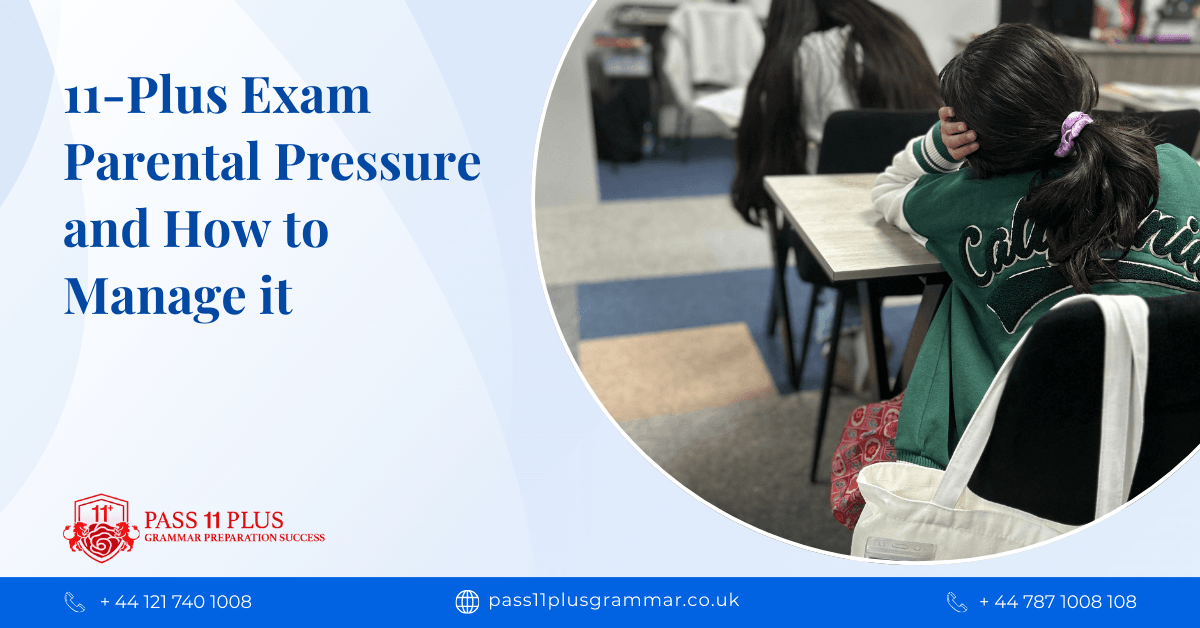
11-Plus Exam Parental Pressure and How to Manage It
Published on
Preparation for the 11 Plus exam is psychologically demanding for many families. Much attention is commonly given to children's revision and performance, yet many parents understand how much pressure from the parents towards the 11-plus exam shapes the whole experience. Expectation, comparisons, and the fear of missed opportunities can quietly increase stress at home, even when intentions are good.
When that concern becomes pressure, it is often absorbed by the children themselves, which can cause anxiety, reduced confidence, and even resistance to learning. Understanding how 11-plus exam parental pressure arises and learning to manage it can make preparation much calmer and considerably more effective.
Why the 11 Plus Creates So Much Pressure for Parents
The 11 Plus is a high-stakes exam with limited grammar school places. For many families, it represents opportunity, validation, and future security, which naturally raises emotions.
Common reasons behind 11-plus exam parental pressure include:
Competitive grammar school admissions
Advice and opinions from other parents
Fear of making the wrong choices
Comparing children’s progress
Over time, this can translate into 11 plus stress for both parents and children, even if nothing is said out loud.
How Parental Pressure Affects Children
Children are highly sensitive to adult emotions. When they sense worry or tension, it often turns into 11 plus exam stress, even if parents believe they are being supportive.
Signs that pressure may be affecting your child include:
Avoiding practice or becoming easily frustrated
Loss of confidence in familiar topics
Emotional outbursts or withdrawal
Difficulty concentrating
Reducing 11-plus exam parental pressure early helps children see preparation as learning, not judgment.
Practical Ways to Reduce 11 Plus Stress at Home
1. Shift the Focus Away From Results
One of the simplest ways to manage 11-plus exam parental pressure is to focus on effort rather than outcomes.
Instead of asking about scores, ask:
What felt easier today?
What did you understand better than last time?
This approach reduces 11 plus stress and keeps motivation intact.
2. Start Preparation at the Right Stage
Starting too early with intense practice can increase pressure, while starting too late can cause panic. Gradual preparation helps children feel secure.
Many families follow a staged approach:
11 Plus preparation Year 3 focuses on reading and confidence
11 Plus preparation Year 4 introduces structure and reasoning skills
11 Plus preparation Year 5 becomes more exam-focused
This steady progression helps keep preparation calm and manageable for both parents and children.
3. Keep Home a Calm Learning Space
Children associate stress with environments. A tense study routine can quickly increase 11 plus exam stress.
Helpful habits include:
Short, consistent study sessions
Clear breaks and rest days
Avoiding revision during emotional moments
No comparisons with other children
A calm routine supports learning far better than long, pressured sessions.
Managing Your Own Expectations as a Parent
Parents often carry silent pressure themselves. Acknowledging this can help reduce 11-plus exam parental pressure at home.
It is important to remember:
Grammar school is not the only path to success
One exam does not define a child’s future
Confidence and well-being matter as much as results
Children who feel emotionally supported cope better with 11 plus stress and often perform more consistently.
Talking to Your Child About the 11 Plus
Open conversations can significantly reduce 11 plus exam stress.
Try to:
Listen without correcting immediately
Acknowledge worries without dismissing them
Reassure your child that effort matters
Avoid frequent reminders about the exam
A child who feels heard is less likely to feel overwhelmed by pressure.
When Extra Guidance Can Ease Pressure
However, at times, this pressure from parents may increase because of their own uncertainty about whether they are doing enough or whether they are doing things right.
A clear structure and a realistic practice can help eliminate such a state of uncertainty. Knowing what to expect can make a child feel prepared and not nervous.
Our experienced 11 Plus tutor at Pass 11 Plus Grammar Preparation Success is committed to a policy of familiarity, continuous progress, and confidence-building rather than pressure.
Teaching Children How to Cope With 11 Plus Stress
Teaching children how to cope with 11 plus stress is just as important as academic work.
Simple strategies include:
Encouraging regular breaks and hobbies
Normalising mistakes as part of learning
Teaching basic breathing or relaxation techniques
Praising effort consistently
These skills help children manage pressure during the 11 Plus and beyond.
A Final Word for Parents
Preparing for the 11 Plus is as much an emotional journey as it is an academic one. Keeping expectations realistic, routines calm, and communication open can make a meaningful difference to how children experience this stage. With steady preparation and the right guidance, the process can feel manageable rather than overwhelming
Frequently Asked Questions
Is the 11 Plus stressful?
The 11 Plus can be stressful for some children, especially when expectations are high or preparation feels rushed. With steady practice and reassurance, many children manage it calmly and confidently.
Why is the 11+ so hard?
The 11+ feels hard because it tests skills like reasoning, comprehension, and time management that are not always practised regularly at school. The pressure of limited grammar school places can also make it feel more challenging.
How to get rid of parental pressure?
Reducing parental pressure starts with focusing on effort rather than results and keeping routines calm and supportive. Open communication and realistic expectations help children feel reassured rather than anxious.

Mr Singh
Founder, Pass My GCSE
Mr Singh is the founder of Pass My GCSE, with over 30 years of teaching experience. Having overcome academic setbacks himself, he is passionate about ensuring no child struggles alone. His approach focuses on personalised support, strong foundations, and building confidence. He has helped students achieve outstanding results in 11+ and GCSE examinations
Loading related posts…