Loading page…
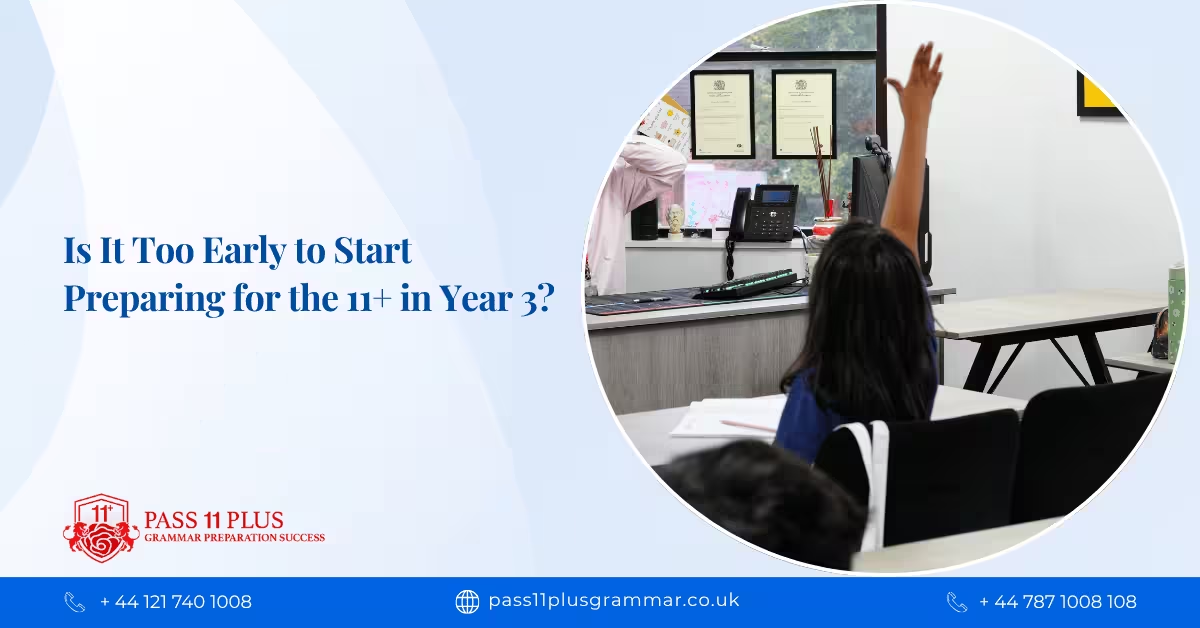
Is It Too Early to Start Preparing for the 11+ in Year 3
Published on
No, it is not too early to start preparing for the 11+ in Year 3, as long as preparation stays light, playful and low-pressure. Formal exam-style practice and timed testing should wait until later, but gentle reading, vocabulary building and number confidence in Year 3 give children a genuine, stress-free head start.
You've just heard that another Year 3 parent has already started tutoring. Now you're wondering if you should too, or whether it's simply too soon to worry about any of this. It's one of the most common questions we hear, and the honest answer isn't a simple yes or no.
It depends entirely on what "starting" actually means.
At Pass 11 Plus Grammar, we've guided thousands of families across the UK through exactly this decision, with over 30 years of experience and a 97% success rate. Here's how we think about it.
Why this question causes so much worry
Every parent seems to have heard something different. One friend started tutoring in Year 3 and swears by it. Another insists that starting too early ruins a child's love of learning. Online forums are full of both opinions, often argued strongly, which leaves parents feeling like there's no safe answer at all.
Here's the reality: both camps are partly right. Starting too early with the wrong kind of preparation genuinely can cause problems. But starting early with the right kind of preparation can be one of the best things you do for your child's confidence.
The real risk isn't starting early. It's starting formally.
Most of the genuine horror stories about early 11+ prep involve one specific mistake: treating a Year 3 child like a Year 6 child. Timed practice papers, heavy Verbal and Non-Verbal Reasoning drilling, and formal 11+ mocks simply aren't appropriate this early. Children this age are still developing the core reading, writing and number skills that everything else depends on.
Push too hard, too soon, and you risk real problems: boredom, resentment towards learning, and skills that look fine on the surface but aren't genuinely solid underneath. This is the version of "starting early" that gives the whole idea a bad reputation.
Light-touch preparation vs formal tutoring
What Year 3 preparation should look like
Daily reading, for enjoyment, not analysis
Gentle vocabulary games and word puzzles
Playful number activities, no drilling
Short, relaxed sessions, 15 to 20 minutes
Zero timed testing or exam pressure
What Year 3 preparation should avoid
Formal Verbal or Non-Verbal Reasoning drills
Timed practice papers or mock exams
Long, homework-style sessions
Pressure to "perform" or compare to peers
Treating Year 3 like a smaller version of Year 6
This distinction is exactly what separates good 11 plus preparation from prep that does more harm than good. The subject matter matters far less than the pace and pressure it's delivered with.
What starting gently in Year 3 actually builds
Children who read daily, play with words, and enjoy gentle number puzzles in Year 3 tend to arrive in Year 4 and Year 5 with a real head start, not because they've "learned the 11+", but because their core skills are simply stronger. Reading builds vocabulary. Vocabulary supports both English and Verbal Reasoning later. Confidence with numbers makes times tables and mental maths click faster.
This is the foundation our year 3 11+ tuition is built around: enjoyable, low-pressure sessions that quietly build the skills every later stage depends on, without ever feeling like "exam prep" to a seven or eight year old.
How preparation should evolve, year by year
Year group | What preparation should look like |
Year 3 | Gentle, playful year 3 11+ tuition focused on reading, vocabulary and number confidence, with no exam pressure at all. |
Year 4 | Steady year 4 11+ tuition building spelling, times tables, mental maths and comprehension. |
Year 5 | Structured year 5 11+ tuition introducing Verbal and Non-Verbal Reasoning, alongside our free 11+ practice papers. |
Year 6 | Focused exam preparation, regular 11+ mocks, our 11+ intensive courses, and dedicated year 6 sats tuition alongside 11+ preparation. |
Notice how each stage builds naturally on the one before it. This is exactly why families who start gently in Year 3 with the right provider often find Year 5 and Year 6 far less stressful than families who start from scratch later on.
11 plus tuition
Wondering what's right for your Year 3 child?
Book a free consultation with Pass 11 Plus Grammar and get an honest assessment of where to start.
What if you'd rather wait until Year 5?
Waiting is also a perfectly reasonable choice, and it doesn't put your child at a disadvantage. Year 5 still leaves plenty of time for thorough 11 plus tuition before most exams. What matters far more than the exact starting year is whether your child enjoys reading, feels confident with numbers, and approaches new challenges with curiosity rather than dread, all things that can be nurtured just as effectively through ordinary family life as through formal tutoring.
The right choice really comes down to your individual child. Some children thrive on a little extra structure early on. Others do just as well with nothing more than good books and family conversations until Year 5.
How Pass 11 Plus Grammar gets the pace right
With over 30 years of experience and a 97% success rate, we've seen exactly how different starting points play out, and what genuinely works for young children. Our experienced 11+ tutors never treat Year 3 as a smaller version of Year 6. Every session is built around enjoyment and confidence first, with formal exam skills introduced only once a child is genuinely ready for them.
Whether your family chooses a gentle Year 3 start or prefers to wait until Year 5, our structured approach adapts to exactly where your child is, not a fixed generic calendar. That flexibility, built over three decades of working with young learners, is one of the biggest reasons our results stay so consistently strong.
Frequently Asked Questions
Is it too early to start preparing for the 11+ in Year 3?
No, it is not too early, as long as preparation stays light and enjoyable. Year 3 11+ tuition should focus on reading, vocabulary and basic number confidence through play, not formal exam-style practice or timed testing.
Can starting 11 plus preparation too early cause burnout?
Yes, if the preparation is too formal or intense for a child's age. Heavy exam-style practice or timed testing in Year 3 can lead to boredom, frustration or burnout well before Year 6. Gentle, low-pressure activities avoid this risk entirely.
What should 11 plus preparation actually look like in Year 3?
In Year 3, preparation should centre on daily reading, building vocabulary, and gentle number confidence through games and puzzles. Formal reasoning practice and timed papers are best introduced later, usually from Year 4 or Year 5.
Is it better to start in Year 3 or wait until Year 5?
Both can work well. A gentle Year 3 start builds strong foundations and reduces pressure later, while starting in Year 5 still leaves enough time for most children to prepare thoroughly. The right choice depends on the individual child and how they respond to early learning.

Mr Singh
Founder, Pass 11 Plus Grammar
Mr Singh is the founder of Pass 11 Plus Grammar, with over 30 years of teaching experience. Having overcome academic setbacks himself, he is passionate about ensuring no child struggles alone. His approach focuses on personalised support, strong foundations, and building confidence. He has helped students achieve outstanding results in 11+ and GCSE examinations
Loading related posts…