What is an 11+ Mock Exam? A Parent's Complete Guide (2027)
Published on
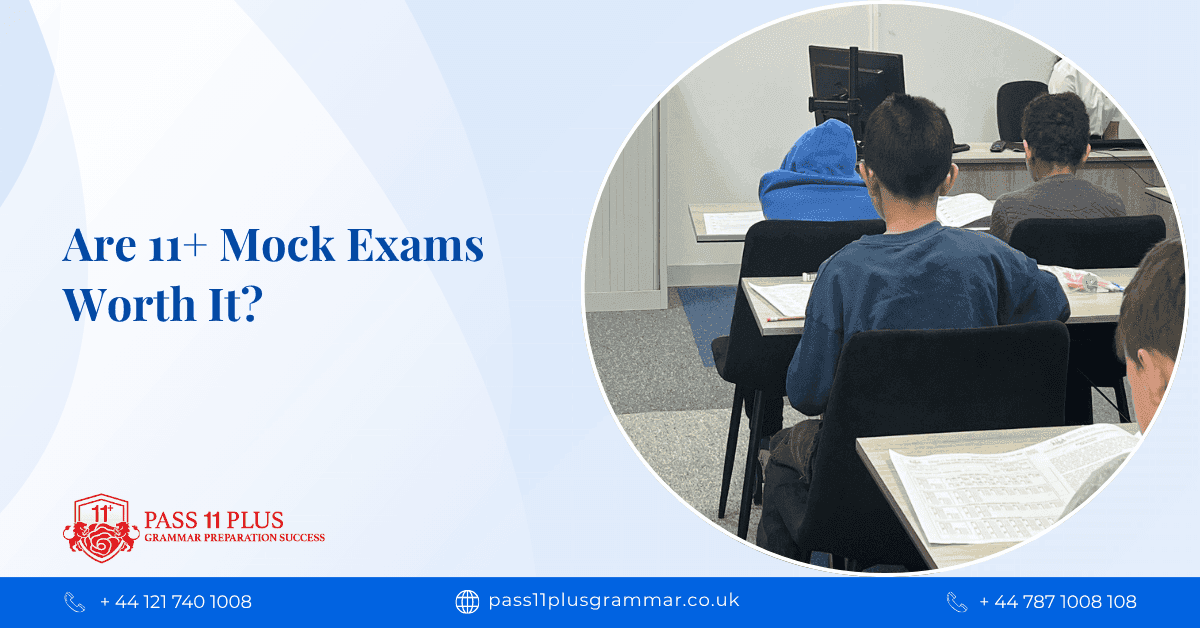
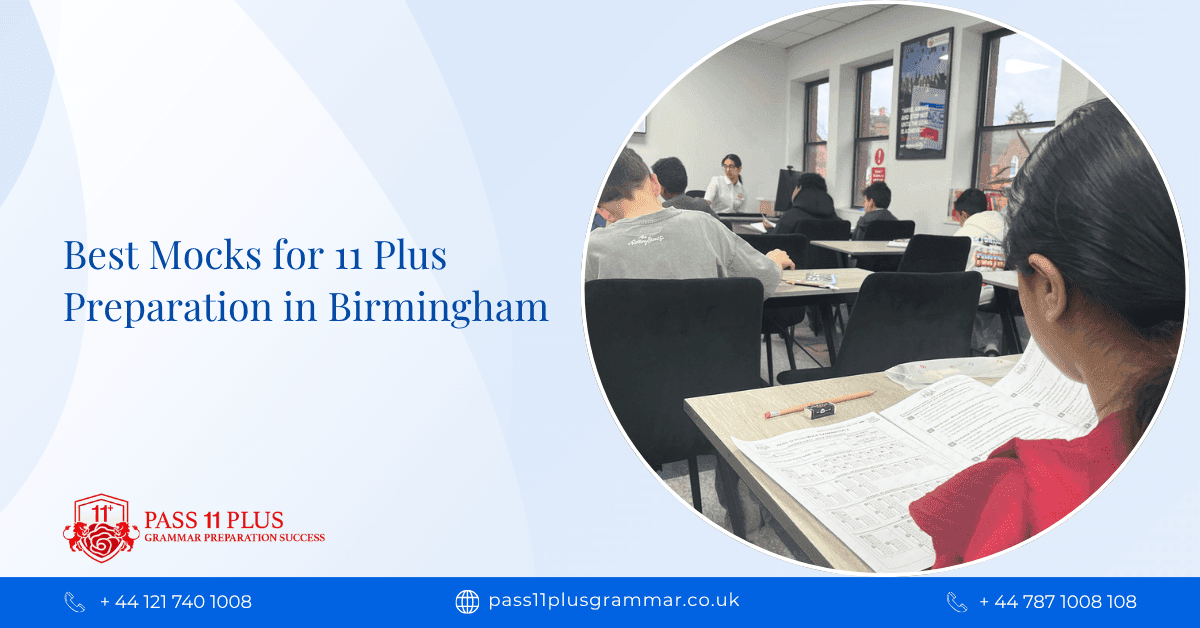
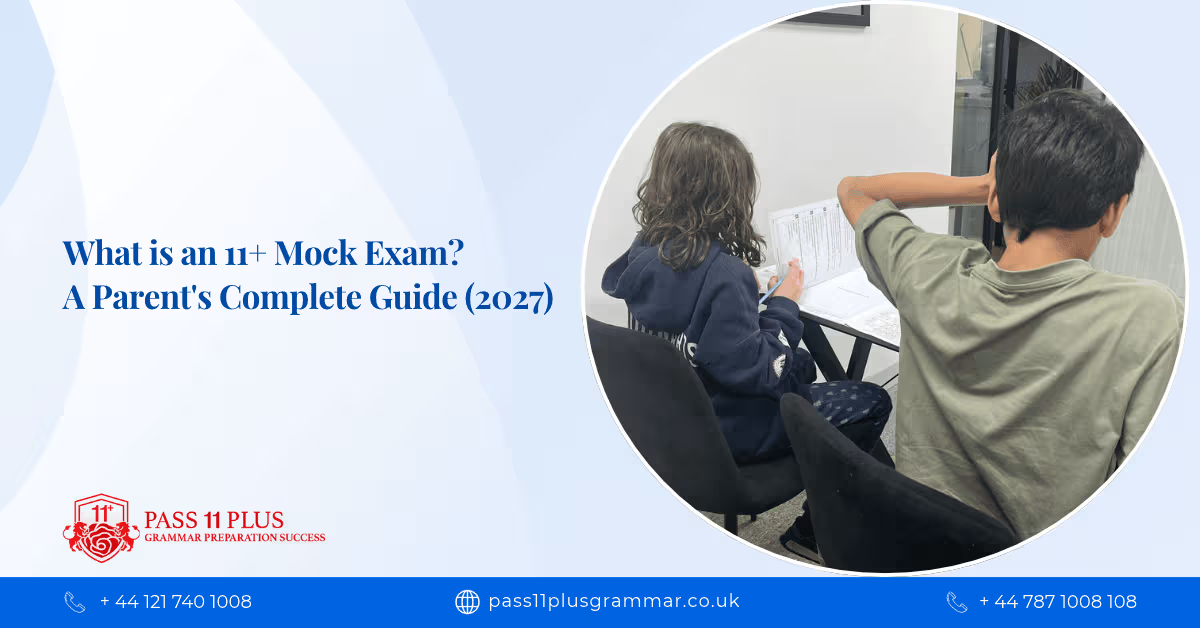
An 11+ mock exam is a practice version of the real 11+ test. Your child sits it with real exam timing and rules, but the result does not affect any school place. A good mock has proper timing, fair marking, a clear report and a ranking against other children. Most children start mocks in Year 5, once they have learned the main topics, and sit a few before the real test in the autumn of Year 6.
An 11+ mock exam is a practice version of the real test, and it is one of the best ways to help your child feel calm on the big day. In this simple guide, you will learn what a mock is, how it is different from a practice paper, what a good one includes and when to start. We also show you how we help children practise with confidence through our 11 plus mocks.
What is an 11+ mock exam?
Think of a mock exam like a football match before the big final. It is not the real game, but the pitch, the rules and the clock all feel real. Your child practises the exact skills they will need on the day, and nothing is lost if it does not go perfectly.
The 11+ is the test that many grammar schools use to choose children for Year 7. It usually covers English, maths, verbal reasoning and non-verbal reasoning. A mock exam copies the style of these papers, so your child gets to try it all in advance.
What an 11+ mock exam is
A full practice test. It copies the real exam, including the types of questions.
Timed. Your child has to work to a real time limit.
A learning tool. It shows what your child can already do and what needs more work.
A confidence builder. After a mock or two, test day feels much less strange.
What an 11+ mock exam is not
It is not the real test. The result does not affect any school place.
It is not a guarantee. A mock gives a helpful guide, not a promise.
It is not a way to learn new topics. Your child needs to learn the work first, then use a mock to test it.
11+ mock exam vs practice paper vs the real 11+ test
Parents often mix these three up. They do different jobs, and your child needs all of them. Here is a simple way to tell them apart.
1. Practice paper
Main job: Learn and practise topics.
Timing: Relaxed; children can pause when needed.
Marking: Usually marked by the child or a tutor.
Does it affect a school place? No.
2. 11+ Mock exam
Main job: Test exam skills in realistic exam conditions.
Timing: Strict, similar to the real 11+ test.
Marking: Usually marked for the child, often with a results report.
Does it affect a school place? No.
3. Real 11+ test
Main job: Determine whether a child qualifies for a grammar school place.
Timing: Strict.
Marking: Marked by the exam board or school.
Does it affect a school place? Yes.
In short, practice papers help your child learn. Mocks help your child perform. The real test is the day it all counts. If you want to start with practice, our 11+ free practice papers are a gentle place to begin before your child sits a full mock.
11+ Mock Exam
Is your child ready for the real 11+ exam?
Our 11+ mock exams help children experience real exam conditions, improve time management and build confidence before test day.
What a good 11+ mock exam includes
Not every mock is the same. A really useful one has four things. Use this as a checklist when you choose.
1. Real exam timing
The clock is the hardest part of the 11+ for many children. A good mock keeps to strict time limits, so your child learns how fast to work and when to move on from a tricky question. This one habit can add marks on its own.
2. Fair, careful marking
Many real 11+ papers use multiple choice questions, with answers filled in on a separate answer sheet. A good mock marks in the same careful way, so the score is fair and your child learns to fill in the sheet properly.
3. A clear report
A number on its own does not tell you much. A good report shows how your child did in each subject and topic. You can then see strong areas and spot where to practise next, without any guessing.
4. A ranking
A ranking shows how your child compares with other children who sat the same mock. This helps you see where your child stands, which is useful because real 11+ places depend on how a child does compared with others. Our 11 plus mocks include all four of these features, so you get the full picture after every paper.
Try our 11+ mock exams
11+ Mock exam scores explained
Many 11+ tests do not report a plain mark such as 40 out of 50. Instead, they use a standardised score. This is the raw mark changed into a fair score that takes your child's age and how the whole group did into account. For many tests, these scores sit between about 70 and 140, and 100 is an average score for a child's age.
Why does this matter? Two children can get the same number of questions right but have different standardised scores, because one is a few months younger. It is also why good mocks give a standardised score, not just a raw mark.
A word of care: a mock score and a real exam score are not always exactly the same. Different providers set their papers in different ways. Use your mock score as a helpful guide to progress, not as a promise of the final result. Every school or area also sets its own pass mark, so check what your target school asks for.
Online 11+ mock exams or paper mocks?
Mock exams can be taken on paper or online. Both can work well, and many families use a mix.
Online mocks are easy to fit around family life. Your child can sit them at home, and there is no travel.
Paper mocks feel closer to the real test if your child will write on paper on the day.
If you choose an online mock, set it up like a real exam. Pick a quiet room, switch off other screens, use a timer and keep to the time limit. Our 11 plus online mock exams are designed to be simple for families, so your child can focus on the questions and not on the technology.
Free 11+ mock test: Is it worth taking?
Yes. A free 11+ mock test is a gentle and low risk first step. It shows you where your child is today, so you can plan what to practise next. There is no cost and no pressure, which makes it a lovely way to introduce a child to the idea of a timed test.
Think of it as a friendly check up. If your child enjoys it and does well, you can move on to full mocks later. If it feels hard, that is useful to know early, while there is plenty of time to improve. You can try our free 11 plus mock test whenever you are ready.
Try our free 11+ mock test
Who should sit an 11+ mock exam?
Almost any child who plans to take the 11+ can gain from a mock. It is especially helpful for these children:
Children who are new to timed tests: A mock shows what working against the clock feels like.
Children who feel nervous: The more familiar the test feels, the calmer a child can be on the day.
Children who are working with a tutor or at home: A mock gives a clear and fair check of progress.
Children who are not sure which subject is weakest: The report points to where to focus.
Children who are close to the pass mark: Small gains in speed and accuracy can make a big difference.
The only time to wait is if your child has not yet covered the main topics. In that case, build skills first and then try a mock.
When should your child take an 11+ mock exam?
The real 11+ is taken in the autumn term of Year 6. It is often held on a Saturday in September, but dates differ between schools and areas, so please check yours. Here is a simple plan to work back from.
1. Early Year 5: Build the basics
Focus on reading, maths skills and reasoning. Introduce the style of questions gently. No full mocks needed yet.
2. Spring of Year 5: Try a first mock
Once the main topics have been covered, a first mock shows a starting point. A free mock is perfect here.
3. Summer of Year 5 and the holidays: Practise and review
Sit a mock, study the report, fix weak spots and repeat. This is the best time to improve.
4. Start of Year 6: Sit mocks that feel like the real thing
Use strict timing and a calm routine. Your child should now know the format well.
5. Test week: Keep it light
Stay calm, sleep well and avoid cramming. The hard work has been done.
How to match a mock exam to your child's real 11+ test
Two main exam boards write most 11+ papers in England, called GL Assessment and CEM. Their papers can look and feel different. A mock built in the style of the wrong exam may not give a true picture of how your child will do.
So before you book, take three easy steps. First, find out which schools your child is aiming for. Second, check the school or local area website to see which exam board they use. Third, choose a mock that follows the same style. If you are not sure, ask us and we will be happy to point you in the right direction.
How to use 11+ mock exam results
The result is where the real learning begins. Here is a calm way to use it.
Celebrate first: Tell your child what went well before you talk about anything else.
Look at each subject: Find the subjects and topics where marks were lost.
Check for timing problems: Did your child run out of time, or rush and make careless slips?
Make a small plan: Choose two or three topics to practise over the next few weeks.
Try again: Use a later mock to see the progress, and celebrate it.
Please remember that a mock score is a snapshot of one day. A low score is not a failure. It simply shows where to focus, and that is exactly what a mock is for.
How to help your child on mock exam day
1. Keep it calm and normal
Say it is just practice. Children do their best when they feel safe, not pressured.
2. Prepare the basics
Have pencils, a rubber and a watch ready, a good breakfast eaten and a good night of sleep behind you.
3. Use real conditions
Choose a quiet room and keep to the time limits. Try not to help during the paper.
4. Practise filling in answer sheets
Many 11+ papers use multiple choice answers on a separate sheet, so it helps to be used to it.
5. Do something fun afterwards
A walk, a game or a treat tells your child that effort is worth celebrating.
How to book an 11+ mock exam
Booking is simple. Follow these easy steps.
1. Find out about your child's real test
Check which schools you are aiming for and which exam board they use.
2. Choose the right mock
Pick a mock that matches your child's year group and target exam. If you are unsure, ask us.
3. Book through our mocks page
Visit our 11 plus mocks page and reserve your child's place.
4. Get ready for the day
Plan a quiet start, get a good night of sleep and keep things relaxed.
5. Review the results together
Read the report, celebrate the good parts and choose what to practise next.
Final thoughts
An 11+ mock exam is a safe place to practise. It shows your child what the real test feels like, builds confidence and tells you exactly what to work on next. Begin when your child has covered the main topics, match the mock to the real exam, and always take time to review the results together.
At Pass 11 Plus Grammar, we help children grow in confidence, one friendly step at a time. When you are ready, we are here to help.
Frequently Asked Questions
What is an 11+ mock exam?
An 11+ mock exam is a practice version of the real 11+ test. Your child sits it with the same kind of timing and rules as the real exam, but the result does not affect any school place. It shows how ready your child is and which topics need more practice.
When should my child start taking 11+ mock exams?
Most children start in Year 5, once they have covered the main topics. A mock only gives a useful picture when your child has learned the work first. Then your child can sit a few mocks over the months before the real test in the autumn of Year 6.

Mr Singh
Founder, Pass 11 Plus Grammar
Mr Singh is the founder of Pass 11 Plus Grammar, with over 30 years of teaching experience. Having overcome academic setbacks himself, he is passionate about ensuring no child struggles alone. His approach focuses on personalised support, strong foundations, and building confidence. He has helped students achieve outstanding results in 11+ and GCSE examinations
Loading related posts…