Loading page…
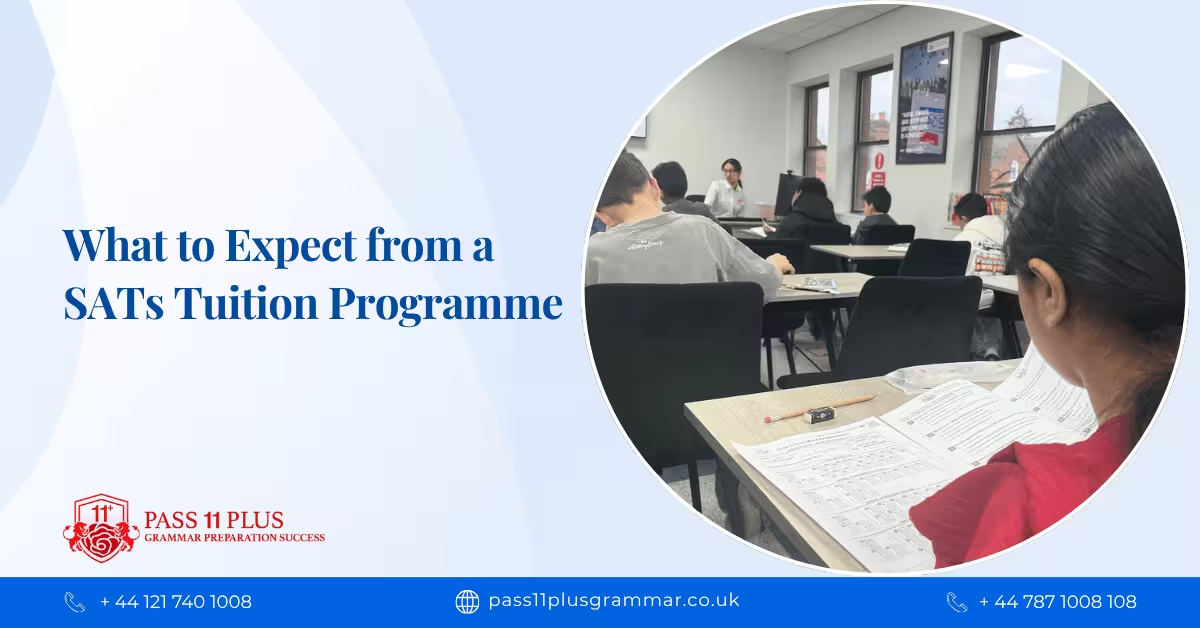
What to Expect from a SATs Tuition Programme
Published on
A good SATs tuition programme includes qualified, experienced tutors, a diagnostic assessment to identify your child's exact gaps, familiarisation with the real exam format, regular timed practice, evidence-based teaching strategies, a focus on the highest-impact topics, and genuine support for your child's confidence and wellbeing throughout.
Booking SATs tuition for the first time can feel like a bit of a leap of faith. You know your child needs support, but what actually happens in these sessions? What should a genuinely good programme include, and how do you know if you've picked the right tutor?
Here's a clear, honest breakdown of what to expect, and exactly what to look for.
At Pass 11 Plus Grammar, we've delivered SATs tuition to families across Birmingham and the UK for over 30 years, with a 97% success rate. Here's exactly what we build into every programme, and what any good provider should offer too.
What SATs actually test
Key Stage 2 SATs are sat by every Year 6 child in England in May. They cover Reading, Grammar, Punctuation and Spelling (SPaG), and Maths, split between an arithmetic paper and two reasoning papers. The results are scored on a scale, with 100 marking the expected standard for the year group and 110 or above marking greater depth.
7 things every good SATs tuition programme should include
1. Qualified, experienced tutors
Look for tutors with genuine experience of the KS2 SATs specifically, not just general primary teaching. They should hold the right qualifications and safeguarding checks, and understand exactly how each paper is structured and marked.
2. A proper diagnostic assessment
Good year 6 SATs tuition never starts with a generic worksheet. It starts by identifying exactly where your child's strengths and gaps are, so every session that follows is genuinely targeted rather than a guess.
3. Familiarity with the real exam format
Children benefit hugely from knowing exactly what the test will look and feel like. Good tuition works through real past questions and explains the different ways a question can be approached, not just the correct answer.
4. Regular practice under timed conditions
Timed practice, introduced gradually, helps children learn to manage the clock and stay calm under pressure, a skill that matters well beyond SATs, into GCSEs and beyond.
5. Evidence-based teaching, not guesswork
A strong tutor keeps up with what actually works in primary maths and English teaching, rather than relying on outdated methods or generic revision guides.
6. A focus on the highest-impact topics
Not every topic carries equal weight in the exam. Good tutors know exactly which areas, like calculation and fractions, decimals and percentages in Maths, carry the most marks, and prioritise accordingly.
7. Genuine support for confidence and wellbeing
SATs are often a child's first formal exam experience. Good tuition builds confidence and a calm mindset alongside academic skills, so children walk in feeling prepared, not anxious.
Questions worth asking before you start
How much experience do you have specifically with KS2 SATs preparation?
Do you use a diagnostic assessment before building a plan?
How will sessions be tailored to my child's particular strengths and gaps?
How will you track and report progress along the way?
How do you help build confidence and reduce anxiety around the exams?
What happens if my child is also preparing for the 11+ at the same time?
A confident, specific answer to each of these is a strong sign you've found the right SATs tutors for your child.
year 6 sats tuition
Give your child a clear, confident path to SATs success.
Get in touch with us today to book a free consultation with Pass 11 Plus Grammar.
When should SATs preparation year 6 actually start?
Starting point | What to expect |
Year 5, gaps identified early | Plenty of time to build core skills gradually, with SATs-specific practice added closer to Year 6. |
Autumn term, Year 6 | The ideal starting point for most children, allowing a full run-up to the May exams. |
Spring term, Year 6 | Still workable, with a more focused programme concentrating on the highest-impact topics. |
Final term before exams | Tight, but experienced year 6 SATs tutors can still make a real difference with targeted, intensive support. |
Whenever you start, the same principle holds: a clear diagnostic starting point, followed by consistent, targeted sessions, delivers far better results than cramming in the final few weeks.
What good SATs sessions actually look like
Beyond the checklist, it helps to know what a session itself should feel like. A strong programme usually blends a few different kinds of activity, rather than relying on worksheets alone.
Question analysis. Working through sample questions together, discussing more than one way to approach them, builds a genuine toolkit of strategies rather than a single memorised method.
Practice tests, in the real format. Regular exposure to exam-style questions makes the actual test feel far less unfamiliar on the day.
Visual and concrete methods. Tools like bar models help children understand the maths behind a question, and pupils are allowed to draw these during the real exam, so practising them matters.
Talking through reasoning out loud. One-to-one sessions give children space to explain their thinking, something that's much harder to do confidently in a busy classroom.
Short games and quick-fire practice. A few minutes of mental maths games at the end of a session keep skills sharp without it feeling like more revision.
This mix keeps sessions engaging rather than repetitive, which matters enormously for a child's motivation over what can be a long run-up to May.
How Pass 11 Plus Grammar delivers expert SATs tuition
Every child who joins our year 6 SATs tuition programme starts with a proper diagnostic assessment, not a generic worksheet pack. From there, sessions are built entirely around their specific gaps in Reading, SPaG and Maths, with regular timed practice introduced gradually as their confidence grows.
Our experienced tutors track progress closely throughout the programme, giving you clear, honest feedback rather than vague reassurance. And because many of our Year 6 families are also juggling 11+ preparation, our approach is designed to support both without either subject losing out.
Over more than 30 years, this structured approach has helped thousands of Birmingham students achieve strong SATs results, while also going on to secure places at some of the country's most competitive grammar schools.
Frequently Asked Questions
What should I expect from a good SATs tuition programme?
A good SATs tuition programme includes qualified, experienced tutors, a diagnostic assessment to identify gaps, familiarisation with the exact exam format, regular timed practice, and support for a child's confidence and wellbeing, not just their test scores.
What questions should I ask a SATs tutor before starting?
Ask about their experience with KS2 SATs specifically, whether they use diagnostic assessments, how they tailor sessions to your child, how progress is tracked and reported, and how they support confidence and reduce exam anxiety.
When should year 6 sats preparation start?
Most children benefit from starting focused SATs preparation year 6 in the autumn term, giving enough time to build core skills before the exams in May. Children with bigger learning gaps often benefit from starting even earlier, in Year 5.

Mr Singh
Founder, Pass 11 Plus Grammar
Mr Singh is the founder of Pass 11 Plus Grammar, with over 30 years of teaching experience. Having overcome academic setbacks himself, he is passionate about ensuring no child struggles alone. His approach focuses on personalised support, strong foundations, and building confidence. He has helped students achieve outstanding results in 11+ and GCSE examinations
Loading related posts…