Loading page…
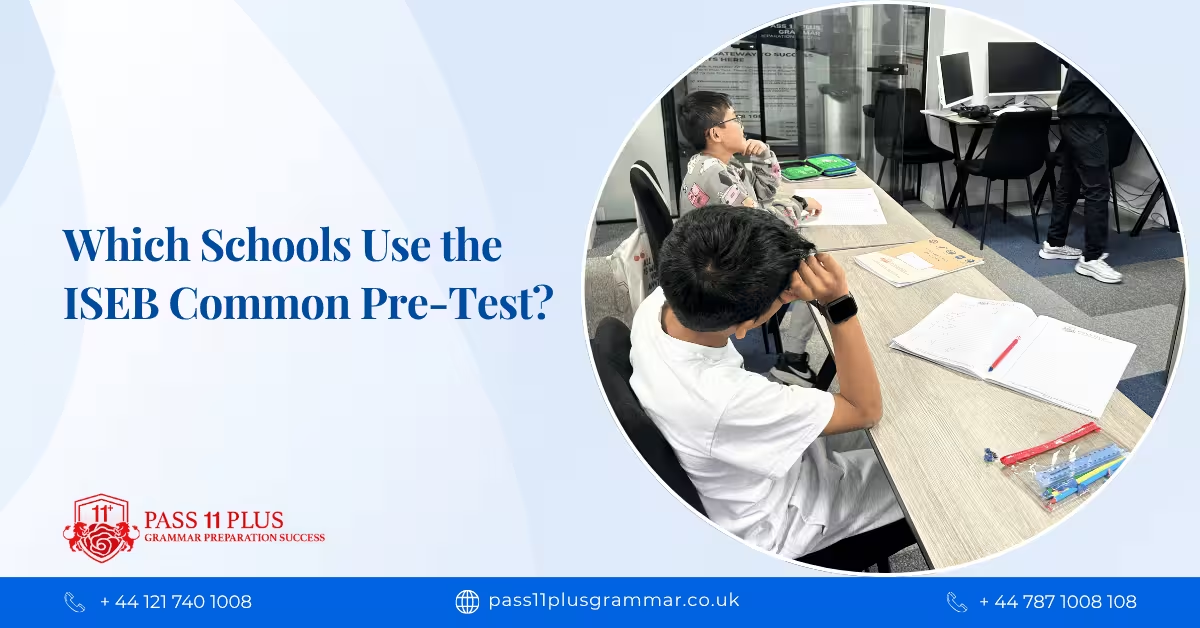
Which Schools Use the ISEB Common Pre-Test?
Published on
The ISEB Common Pre-Test is used by leading independent senior schools, including Eton, Harrow, Winchester, Westminster, St Paul's, Wycombe Abbey, Benenden, Charterhouse, Tonbridge, Wellington College and Radley. The latest published 2026 list names 58 schools. ISEB does not publish a full school list on its family pages, so always confirm with the school's own admissions page before you plan.
Is your child aiming for an independent senior school, and you keep hearing about the ISEB Common Pre-Test? Here is a simple guide to which schools use the ISEB Common Pre-Test, with a full 2026 list, how to double-check your own school, and what to do next.
Which schools use the ISEB Common Pre-Test in 2026? Full list
Here are the independent schools named on the latest published 2026 list of ISEB Common Pre-Test schools.
58 schools on the 2026 list
Ampleforth College
Bedford School
Benenden School
Berkhamsted Senior School
Birkdale School
Bloxham School
Bradfield College
Brentwood School
Brighton College
Caterham School
Charterhouse
Cranleigh School
Downe House School
Eaton Square Upper School
Eton College
Fulham Senior School
Harrodian Senior School
Harrow School
Hoe Bridge School
Holmwood House Senior School
Hurstpierpoint College
James Allen's Girls' School
Kew House School
King Edward's School Witley
King's School Canterbury
King's School Rochester
Lady Eleanor Holles
Lancing College
Maida Vale School
Marlborough College
New Hall School
Oratory School
Palmers Green High School
Pangbourne College
Radley College
Reed's School
Royal Grammar School Guildford
Royal Hospital School
Seaford College
Sevenoaks School
St Albans High School
St Dunstan's College
St Edward's School
St John's Leatherhead
St Paul's School
St Swithun's School
Stowe School
Streatham & Clapham High School
Sutton Valence School
Tonbridge School
Tormead School
Tranby
Walthamstow Hall
Wellington College
Westminster School
Winchester College
Woldingham
Wycombe Abbey
Please read this before you rely on the list. ISEB's own family pages do not list every school that uses the Pre-Tests. This list comes from a published 2026 list, but schools can change their tests from year to year, so always check your target school's admissions page.
Which entry points use the ISEB Common Pre-Test?
ISEB says the Pre-Tests are used by leading independent schools for Year 7 entry, or for delayed entry in Year 9. Most children take the tests once in Year 6 for Year 7 entry, which is often called the 11+.
ISEB also says that some senior schools, such as Eton and Harrow, use the Pre-Tests as a first step towards Year 9 entry, which is often called the 13+. So a child in Year 6 may sit the Pre-Test even if they are aiming for a school that they will join later.
How to check if your school uses the ISEB Common Pre-Test
1. Read the school's admissions page
Most schools say clearly which test they use, and which year groups it is for. Look for words like "ISEB Pre-Test" or "Common Pre-Test".
2. Email or ring the admissions office
This is the safest way. Ask which test is needed, which entry year it is for, and what the deadline is.
3. Ask your child's current school or invigilation centre
Many primary and prep schools already help families with the Pre-Tests, and the invigilation centre can tell you your child's test dates.
4. Contact ISEB if you are stuck
ISEB has a Pre-Tests support portal for families, so you can ask questions about registering and testing.
11 Plus Tuition
Is your child preparing for the ISEB Common Pre-Test?
Our 11 plus tutors know exactly how the adaptive format works, and exactly how to build the skills it genuinely rewards.
ISEB Pre-Test dates for 2027 entry
Children who sit the Pre-Tests in the 2026 to 2027 session, usually in Year 6, are aiming for Year 7 entry in September 2027. Here are the official ISEB dates.
Date | What happens |
Tuesday 9 June 2026 | Parent registration opened on the ISEB Guardian Portal for the 2026 to 2027 session |
Tuesday 1 September 2026 | Live testing for the 2026 to 2027 session began |
Late May 2027 | Testing for the 2026 to 2027 session ends |
How the ISEB Common Pre-Test works
Here are the simple, official facts from ISEB about the Pre-Tests.
Four online tests: English, maths, verbal reasoning and non-verbal reasoning. They take 2 hours 15 minutes in total.
Adaptive: The questions change depending on how your child answers, so children do not waste time on questions that are far too easy or too hard.
Shared: Your child sits the tests once, and every senior school that needs the result can see it.
Age standardised: Results are adjusted for age, so younger children are not at a disadvantage.
If you would like a deeper look at the subjects, scoring and format, read our full guide to the ISEB Common Pre-Test.
Do all independent schools use the ISEB Pre-Test?
No. This is a very common mix up. Many independent schools use other tests instead, such as Quest Assessments, CAT4, Common Entrance or their own entrance exams. Some use more than one test for different entry points.
State grammar schools mostly use other providers too, such as GL Assessment. So if your child is applying to a mix of schools, you may need to prepare for more than one test format. Check each school one by one.
Final thoughts
Knowing which schools use the ISEB Common Pre-Test is a helpful first step, but it is only the start. Lists online are a very good guide, and the schools on the 2026 list include some of the best known names in the country. Even so, no list is perfect, and schools can change their tests. The most reliable answer will always come from the school's own admissions page or office.
Whichever schools are on your list, the best thing you can give your child is steady, calm practice and a lot of encouragement. At Pass 11 Plus Grammar, we are always here to help your family feel clear and confident along the way.
Frequently Asked Questions
Which schools use the ISEB Common Pre-Test?
The ISEB Common Pre-Test is used by leading independent senior schools, including Eton College, Harrow School, Winchester College, Westminster School, St Paul's School, Wycombe Abbey, Benenden School, Charterhouse, Tonbridge School, Wellington College and Radley College.
How many schools use the ISEB Common Pre-Test?
The latest published 2026 list names 58 independent senior schools. Lists differ because schools can change their admissions tests and because some schools only use the Pre-Test for certain entry points.
Do state grammar schools use the ISEB Common Pre-Test?
The ISEB Pre-Tests are used by leading independent senior schools. State grammar schools mostly use other providers, such as GL Assessment, so always check the admissions page of your target school.

Mr Singh
Founder, Pass 11 Plus Grammar
Mr Singh is the founder of Pass 11 Plus Grammar, with over 30 years of teaching experience. Having overcome academic setbacks himself, he is passionate about ensuring no child struggles alone. His approach focuses on personalised support, strong foundations, and building confidence. He has helped students achieve outstanding results in 11+ and GCSE examinations
Loading related posts…