Loading page…
11+ Year 3 October Half-Term Activities
Published on
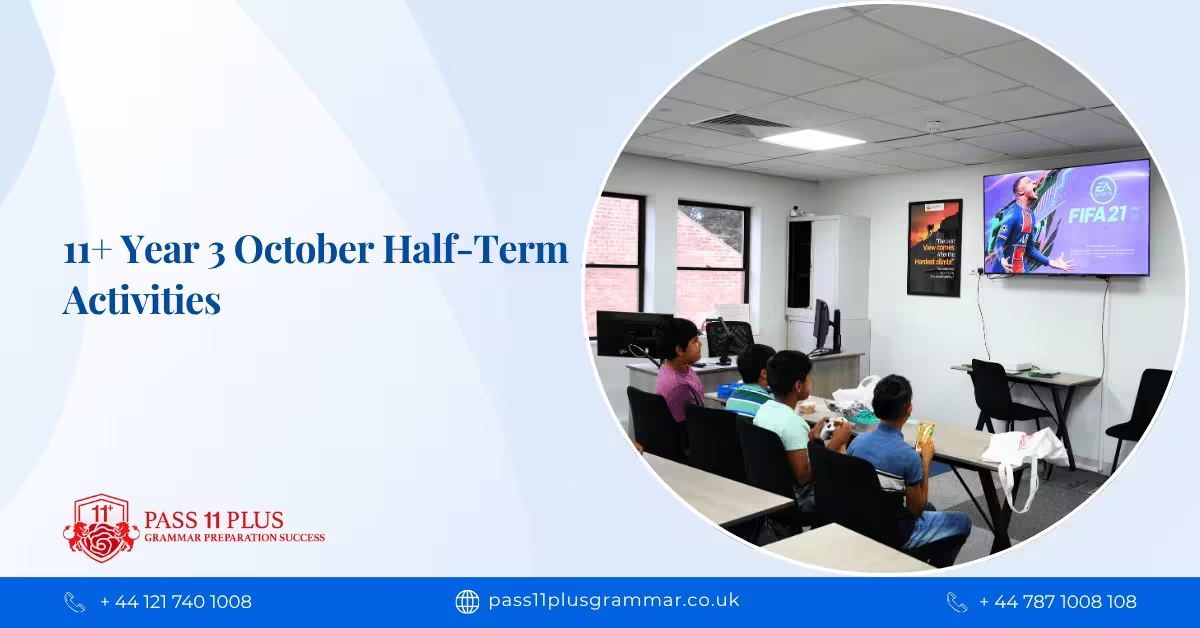
The best 11+ Year 3 October half-term activities are short, fun, and simple. Read together every day, play times tables and number games, try word and puzzle games, bake or build something, and visit the library or a museum. About 15 to 20 minutes of learning play a day is plenty. For most schools in England, October half-term is Monday 26 to Friday 30 October 2026, but please check your own school's calendar. Year 3 is the time for play and habits, not for timed papers.
Half-term is a time to rest, play and have fun. It is also a lovely chance to give your Year 3 child a gentle head start. This guide shares simple 11+ Year 3 October half-term activities that feel like games, not homework, so your child stays happy while their skills grow.
Why plan 11+ Year 3 activities for October half-term?
Many parents of Year 3 children start to think about the 11 plus around now. The test is still a few years away, so there is no rush. But half-term is a great time to build good habits, because there is no homework, no early alarm, and lots of free time.
Most schools in England have October half-term from Monday 26 to Friday 30 October 2026, and children go back on Monday 2 November. Some schools and councils use different dates, so check your school's calendar first.
A short, happy activity each day can do a lot. Reading, number games and puzzles all help children grow the skills the 11 plus uses later. Our approach to 11 plus preparation Year 3 is built on exactly this idea: keep it light, keep it fun and build confidence first.
Is it too early to start 11 plus preparation in Year 3?
This is a question we hear all the time. The honest answer has two parts.
Too early for formal exam practice. Timed papers and exam-style questions are not needed at age 7 or 8, and they can make learning feel stressful.
Not too early for gentle habits. Reading widely, learning times tables, growing vocabulary and playing puzzle games all help later on.
Many 11 plus tests are taken in September of Year 6. For a child in Year 3 now, that is around autumn 2029. That gives you plenty of time. If you would like to read more, we have written a full guide: Is it too early to start preparing for the 11+ in Year 3?
Year group | What to focus on |
Year 3 | Reading for fun, times tables, number games, vocabulary and puzzles |
Year 4 | Stronger maths and English basics, and light reasoning practice |
Year 5 | Focused preparation, with practice papers when your child is ready |
Start of Year 6 | The test itself, in many areas |
How much should a Year 3 child do at half-term?
Less than you might think. Children aged 7 and 8 learn best in short bursts, and they need lots of rest and play to stay happy. Here is a simple guide.
Part of the day | What to do | Time |
Morning or afternoon | One fun learning activity, like a game, a bake, or a puzzle | 10 to 15 minutes |
Quiet time | Reading together or on their own | 10 to 15 minutes |
The rest of the day | Free play, outdoors, friends, family and rest | As long as they like |
That adds up to roughly 15 to 20 minutes of focused learning play a day, plus reading. It is perfectly fine to skip a day, too. If your child is tired or grumpy, choose a story at bedtime and call it a win.
Year 3 11 plus reading activities for half-term
Reading is the most powerful thing you can do. Children who read widely meet lots of new words and ideas, and this helps with English, reasoning, and thinking skills for years to come. You cannot rush it, so starting early really helps.
1. Daily story time
Read a chapter book together each day, even if your child can read alone. Take turns reading a page each. Stop at an exciting part, and ask, "What do you think happens next?"
2. A library trip
Let your child choose three books: a story, a fact book, and something silly or new. Borrowing from a library is free, and a mixed pile of books helps children discover what they love.
3. The "word detective" game
While you read, find one new word. Guess what it means from the clues, then check it in a dictionary. Write it on a sticky note and use it three times that day.
4. Retell the story
After reading, ask your child to tell you the story in their own words. This builds understanding and memory, which are skills they need for comprehension later.
Year 3 11 plus maths games and activities
In Year 3, the National Curriculum asks children to learn the 3, 4 and 8 times tables. In Year 4, they move on to the tables up to 12 times 12. Strong number skills make later maths feel much easier, so half-term is a great time to practise them playfully.
1. Times table treasure hunt
Hide sticky notes around the house, each with a question like "4 x 3". Your child finds one, solves it, and gets the next clue. Try the 3, 4, and 8 tables first.
2. Bake and measure
Baking is brilliant maths. Let your child weigh the flour, count the eggs, and cut the cake into equal parts. Ask, "If we cut this into 8 pieces, how many pieces would each of us get?"
3. Board and card games
Games like dominoes, snakes and ladders, Uno and simple dice games build counting, adding and quick thinking. Ask your child to add the dice together before they move.
4. Pumpkin and autumn maths
Weigh and measure a pumpkin, count its seeds in groups of 10, or sort conkers and leaves by size. Then draw a simple bar chart or pictogram to show what you found. Year 3 children learn to read and make these in school.
5. Shop like a pro
Give your child a small shopping list and a pretend budget. They add up the prices and work out the change. It is real maths, with real rewards.
Word and vocabulary games for 11+ Year 3 children
A big vocabulary is one of the best gifts you can give a young learner. Words help with reading, writing, and the verbal reasoning questions that many 11 plus tests include later. These games are easy and need no special equipment.
"Word of the day." Pick one interesting word each morning, like "enormous" or "curious". Challenge everyone to use it in a sentence before bedtime.
"Same or opposite?" Say a word, and your child shouts a word that means the same, or the opposite. Take turns to make it a game.
"20 questions." Think of an object and let your child guess it in 20 yes or no questions. It builds clear thinking and careful listening.
"Word searches and Boggle." These are great for spelling and spotting patterns in words.
"Rhyme time." Take turns to say rhyming words until someone runs out. It is silly, fast, and fun.
Reasoning and puzzle activities for Year 3
Reasoning is about noticing patterns and solving puzzles. Many 11 plus tests include reasoning questions with words or shapes. Year 3 children do not need to practise exam-style questions yet, but playing with patterns and puzzles builds a strong thinking brain.
1. Build with blocks
LEGO or wooden blocks help children picture shapes in their heads. Try building a model, then asking your child to draw it from above or from the side.
2. Jigsaws and tangrams
Jigsaws teach children to look closely and test ideas. Tangram puzzles ask them to build pictures from simple shapes. Both are great for problem-solving.
3. Pattern games
Make a pattern with coloured counters or beads, like red, blue, blue, red, blue, blue. Ask, "What comes next?" Then let your child make a pattern for you to solve.
4. Odd one out
Show three or four objects or pictures, where one does not belong. Ask your child to explain why. The explaining part is just as important as the answer.
11 Plus Tuition
Want a gentle start for your Year 3 child?
Our 11 plus tutors help young learners build confidence through play, not pressure.
Creative writing ideas for October half-term
Writing for fun builds confidence, spelling and imagination. Keep it light, and never worry about mistakes. The goal is joy.
Half-term diary: Write one or two sentences each day about the best part of it.
Postcard to a friend or grandparent: Practise neat handwriting and careful spelling for a real reason.
Story starter: Give an opening line, like "One foggy morning, a strange box arrived on our doorstep." Let your child finish the story.
Comic strips: Draw four boxes and tell a story with pictures and speech bubbles.
Praise your child's ideas first. Then, if you like, pick one small thing to fix together, such as a missing full stop.
Out and about: Autumn learning adventures
Learning does not have to happen at a table. October is a lovely time for outdoor ideas, and fresh air is good for growing minds.
Activity | What your child learns |
Autumn nature walk, collecting leaves and conkers | Counting, sorting, and new words like "deciduous" |
Making a nature journal | Observing, drawing, describing and writing |
Shape hunt in the park or street | Spotting circles, rectangles, triangles and patterns |
A trip to a museum or gallery | New facts, big questions and curiosity |
Playing a ball game or going to the playground | Fitness, teamwork and happy energy |
A simple 5-day October half-term plan for Year 3
Here is an easy plan you can copy. Each day has one small activity and one reading moment. Feel free to swap days around, or skip any day when your child needs a rest.
Day | Learning play (10 to 15 minutes) | Reading (10 to 15 minutes) |
Monday 26 October | Times table treasure hunt (3 and 4 tables) | Start a new chapter book together |
Tuesday 27 October | Baking and measuring | Read a recipe, then a short story |
Wednesday 28 October | Autumn nature walk and shape hunt | Read a nature fact book |
Thursday 29 October | Pumpkin maths and a bar chart | Retell the story from your chapter book |
Friday 30 October | Board game and a pattern puzzle | Visit the library or share a favourite story |
How to prepare for 11+ in Year 3 after half-term
Once your child is back at school, the best plan is to keep the same gentle habits going. A little reading every day, a few minutes of times tables, and the odd puzzle or word game are enough.
Our guide on how to prepare for 11+ in Year 3 walks you through a simple routine for the whole year, with ideas for each term. It is a great next read.
How Pass 11 Plus Grammar helps 11+ Year 3 children
Most Year 3 children do not need extra help. But some families like the reassurance of a friendly expert, or want help for a child who finds reading or maths tricky. Our Year 3 11 plus tuition keeps things gentle and playful, and builds confidence step by step.
When your child is a little older, our 11 plus tuition builds the English, maths and reasoning skills that grammar school tests look for, with a calm and clear plan.
If you would like friendly advice, you can meet our 11 plus tutors in Birmingham, and we will happily talk through your options.
Final thoughts
The best 11+ Year 3 October half-term activities are the ones your child enjoys. Read together, play with numbers and words, solve a puzzle, bake a cake or go on an autumn walk. A few happy minutes each day build skills that last for years, and rest and fun matter just as much.
The 11 plus is still a few years away, so there is no need to rush. Keep it light, keep it kind, and let your child's curiosity lead the way. At Pass 11 Plus Grammar, we are always here to help when you are ready.
Frequently Asked Questions
What are good 11+ Year 3 October half-term activities?
Good 11+ Year 3 October half-term activities are short, fun and playful. Read together every day, practise the 3, 4 and 8 times tables with games, play word and vocabulary games, try shape and pattern puzzles, bake or build something, and visit the library or a museum. About 15 to 20 minutes of learning play a day, mixed with plenty of rest, is plenty for a Year 3 child.
Can half-term activities really help with 11+ preparation in Year 3?
Yes. Reading, number games, word games and puzzles build the skills that the 11+ uses later, such as vocabulary, mental arithmetic and reasoning. Doing them in a relaxed way over half-term builds confidence without any pressure.
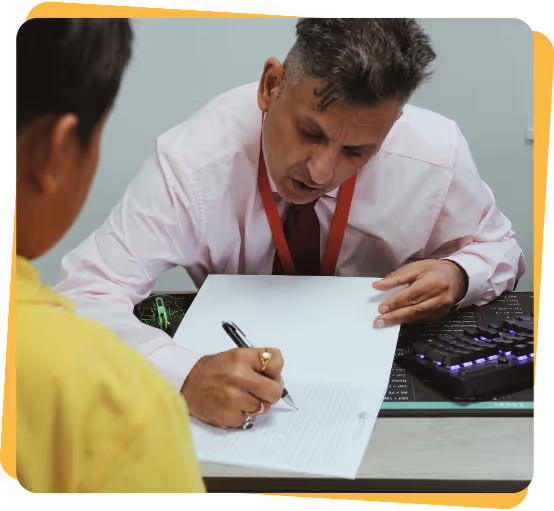
Mr Singh
Founder, Pass 11 Plus Grammar
Mr Singh is the founder of Pass 11 Plus Grammar, with over 30 years of teaching experience. Having overcome academic setbacks himself, he is passionate about ensuring no child struggles alone. His approach focuses on personalised support, strong foundations, and building confidence. He has helped students achieve outstanding results in 11+ and GCSE examinations
Loading related posts…