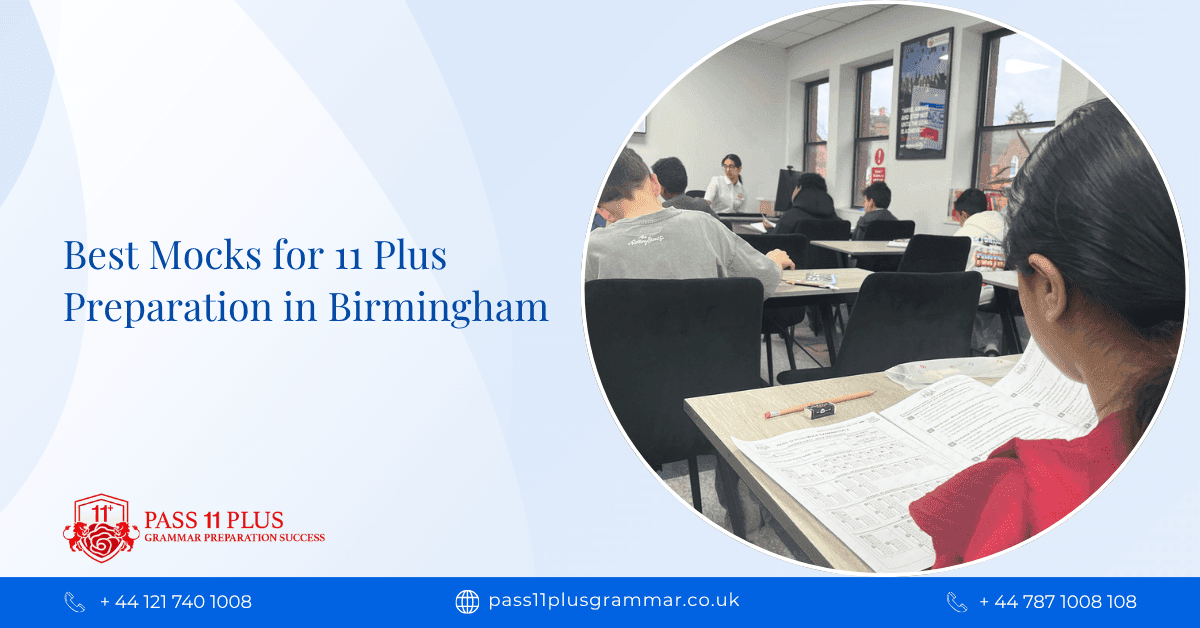
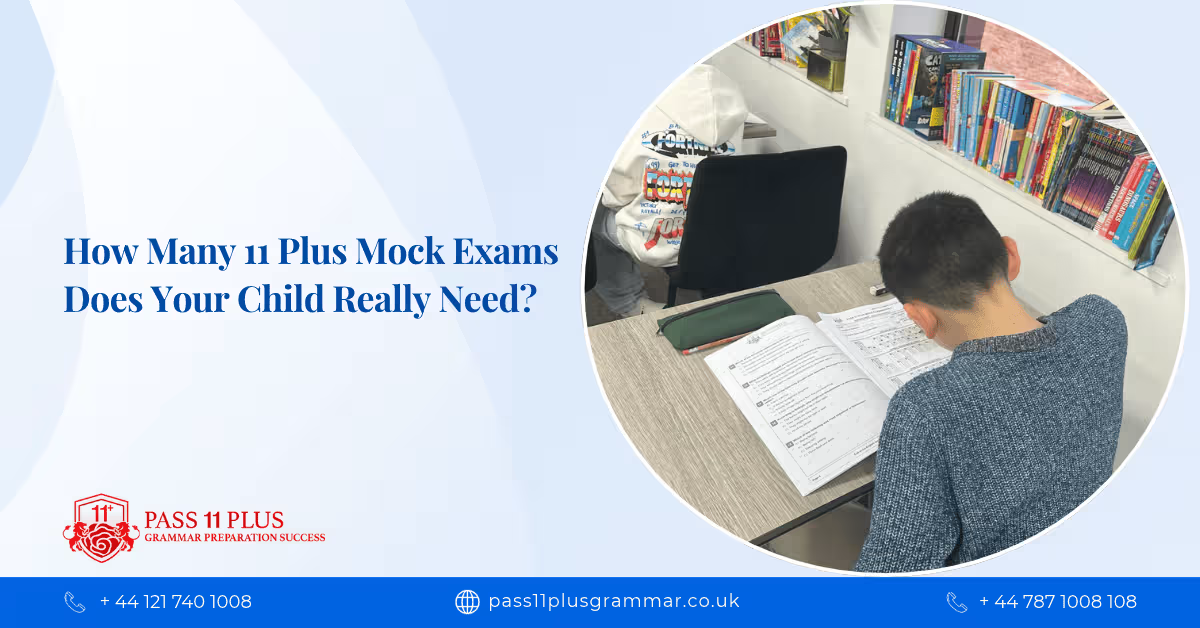
How Many 11 Plus Mock Exams Does Your Child Really Need?
Published on
Most children need 3 to 5 11 plus mock exams. We suggest the first mock about six months before the real exam, then one every four to six weeks, with a final mock four to six weeks before test day. Some children need a few more and some need fewer. What matters most is reviewing every mock and using the results to guide practice, not the number itself.
Is one mock enough? Is ten too many? There is a lot of different advice online, and it can be confusing. This guide gives you a clear, honest answer, with a timeline you can follow.
How many 11 plus mock exams does your child need?
Here is the honest answer. There is no magic number, and no official rule. But after more than 30 years of helping families, we can say that 3-5 mocks is the right range for most children.
Why not just one? Because one mock only shows you where your child is today. It cannot show if they are improving. Why not twenty? Because children also need time to learn and rest between mocks. Three to five, spaced out well and reviewed carefully, gives the best balance.
Our blog, Are 11+ mock exams worth it?, explains in more detail why mocks are so helpful.
What is an 11+ mock exam?
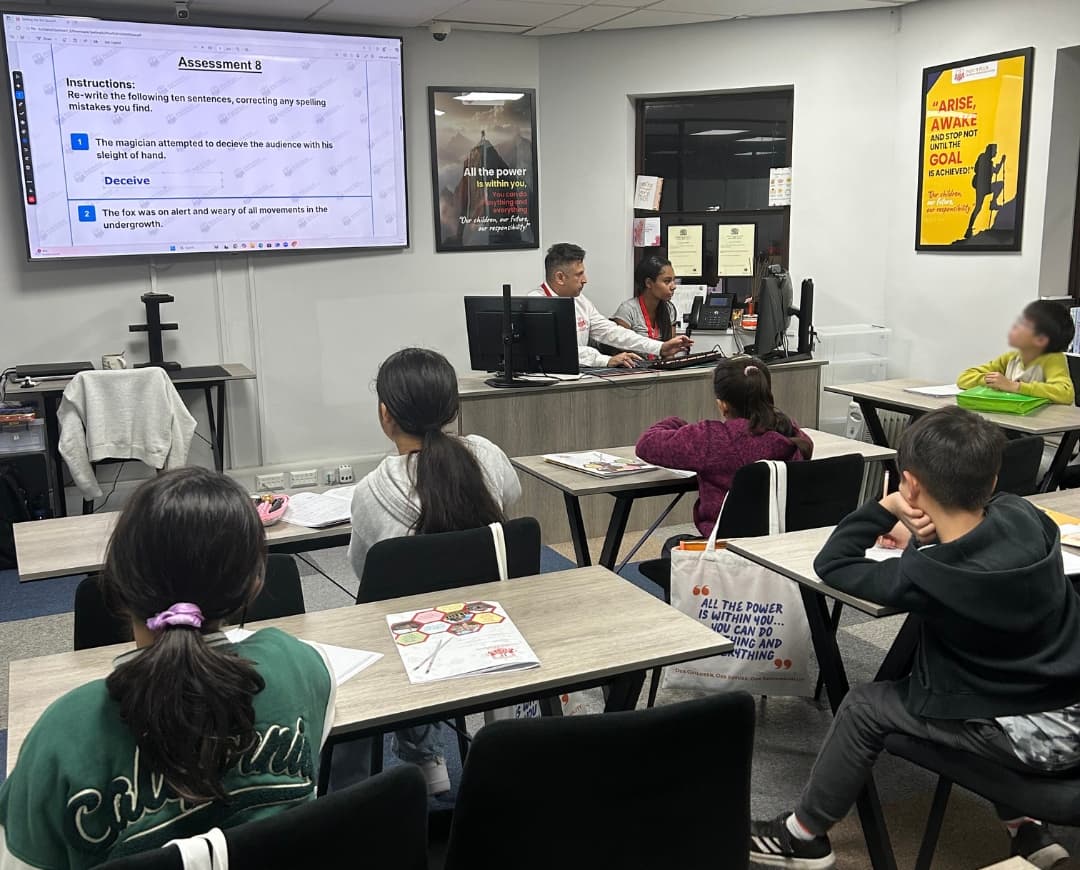
An 11+ mock exam is a practice version of the real test. It is timed, quiet and run like the real thing, often in a proper exam room with an invigilator. After the mock, a good provider gives you results by subject and question type, so you can see exactly where marks were lost.
The goal is not just to practise the questions. It is to practise the whole experience, including the clock, the unfamiliar room and the nerves. That is something home practice cannot fully copy.
Try our 11 plus mock exams
How many 11+ mocks do experts recommend?
If you search online, you will see many different numbers. That can feel confusing, but there is a good reason. No exam board or council sets a number, so each tutor gives advice based on their own experience. Here is what you will commonly see.
Type of advice | Number of mocks | Our view |
Short, focused plan | 3 to 5 | Our recommendation for most children |
Common middle range | 3 to 6 | Fine for children who want a little more practice |
Longer plans from Year 5 | 8 to 15 or more | Can work for children starting early, if each mock is well reviewed |
Our view is simple. More is not always better. A child who sits four mocks and learns from each one will usually do better than a child who sits ten and only looks at the score. For more on this, read How to use mock tests for 11 plus preparation.
Our 11 plus mock exam timeline
Here is a simple plan. As an example, we have used a child in Year 5 now, who will sit the 11+ in September 2027. Please change the months to match your child's test date.
When | Mock | What it is for |
About 6 months before (around March 2027) | Mock 1 | A starting point. It shows where your child really is |
4 to 6 weeks later (April or May 2027) | Mock 2 | Tracks progress after focused practice |
4 to 6 weeks later (June or July 2027) | Mock 3 | Builds exam stamina and time skills |
4 to 6 weeks before the exam (around August 2027) | Final mock | Tests readiness and settles nerves |
11 Plus Mock Exams
Is your child getting enough 11+ mock exam practice?
Our 11 plus mock exams help children improve exam technique, manage time effectively and build confidence for grammar school entrance tests.
How many 11+ mocks do you need in your situation?
Every child is different. Here is how we would adjust the plan.
Your situation | Our suggestion |
Starting early (Year 4 or early Year 5) | Four to five mocks, starting about six months before the exam |
Starting in the middle of Year 5 | Three to four mocks, spaced four to six weeks apart |
Starting late (Year 6) | Two to three mocks, with focused practice in between |
Child who gets very nervous | A few more mocks can help, as long as each one is calm and well supported |
Child who is already strong and calm | Fewer mocks may be enough |
Can your child take too many 11 plus mocks?
Yes, they can. Mocks are a tool, and a tool can be overused. Watch out for these signs that it is time to slow down.
Your child feels tired or dreads every mock.
Scores stay flat, because there is no time to learn between mocks.
Mocks are taking over time that could be used for fixing weak areas.
Your child starts to link exams with stress, not learning.
If you notice any of these, take a short break. Spend two or three weeks on gentle, focused practice, then try the next mock. Quality always beats quantity.
What to do after every 11+ mock exam
The mock is only half the job. What you do afterwards is what makes the difference. Here is how to get the most from every one.
1. Read the full report, not just the score
Look at each section. A low verbal reasoning score needs a different fix from a low maths score.
2. Go through the paper together
Look at every wrong answer. Was it a misread question, a gap in knowledge or a lack of time? Each type needs a different fix.
3. Update the practice plan
Move the topics that lost marks to the top of the list, and practise them with short, focused sessions.
4. Share the results with your tutor
A tutor can reshape lessons around the gaps, so no time is wasted on things your child already knows.
5. Praise the effort
Sitting a full exam is hard work. Celebrate the effort, whatever the score, to keep your child positive.
Our 11 plus mocks at Pass 11 Plus Grammar
At Pass 11 Plus Grammar, we run our 11 plus mocks under full exam conditions, and we give detailed feedback after each sitting. That means you see how your child did in each subject and each question type, not just one total score.
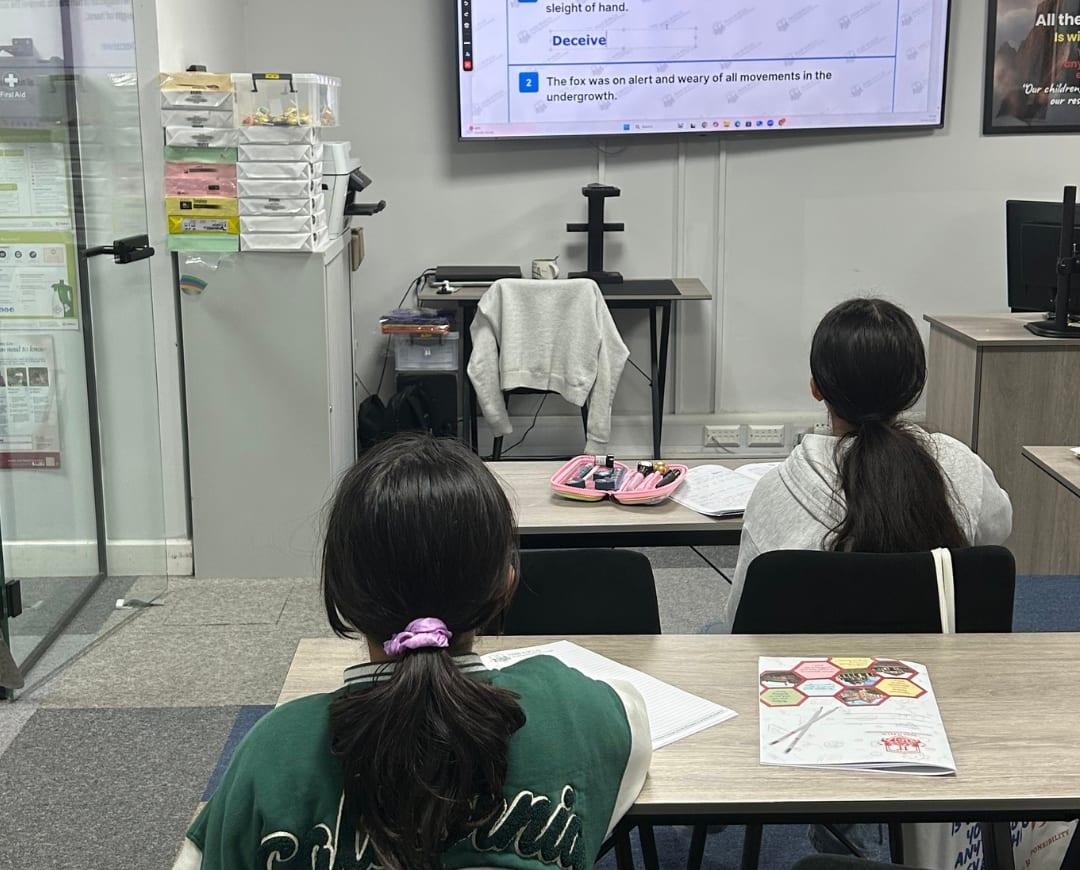
Our 11+ mocks are taken in real exam style, so your child gets used to the clock and the room.
Our online 11 plus mock exams let families practise from home, wherever they live.
You can build a bundle of mocks to match your child's timeline, so you only book what you need.
Our free 11+ mock test is a friendly way to find out where your child stands today. No payment required.
Our 11 plus tutors in Birmingham use mock results to plan targeted lessons.
Final thoughts
So, how many 11 plus mock exams does your child really need? For most children, three to five, spaced four to six weeks apart, with the first about six months before the exam. But the number is less important than what you do with each result. Review it, learn from it and practise the gaps.
If you would like friendly help planning your child's mocks, we are always here. At Pass 11 Plus Grammar, we love helping children feel ready and proud on test day.
Recommended products

11 Plus Mock Exam - Mock 1 - Saturday 13th March 2027
📌 Please note: Payments are non-refundable once confirmed.
Date: 13 Mar 2027
11 Plus Mock Exam - Mock 2 - Saturday 15th May 2027
📌 Please note: Payments are non-refundable once confirmed.
Date: 15 May 2027
11 Plus Mock Exam - Mock 3 - Saturday 12th June 2027
📌 Please note: Payments are non-refundable once confirmed.
Date: 12 Jun 2027
Frequently Asked Questions
How many 11 plus mock exams should my child take?
Most children do well with 3 to 5 mock exams before the real 11+, spaced about four to six weeks apart. There is no official number, and advice from tutors varies. The most important thing is to review each mock carefully and use the results to guide practice.
When should my child take their first 11+ mock?
Around six months before the real exam is a good time. This gives you a clear starting point and plenty of time to work on the weak areas. For a child sitting the 11+ in September of Year 6, that means around March of Year 5.

Mr Singh
Founder, Pass 11 Plus Grammar
Mr Singh is the founder of Pass 11 Plus Grammar, with over 30 years of teaching experience. Having overcome academic setbacks himself, he is passionate about ensuring no child struggles alone. His approach focuses on personalised support, strong foundations, and building confidence. He has helped students achieve outstanding results in 11+ and GCSE examinations
Loading related posts…