Loading page…
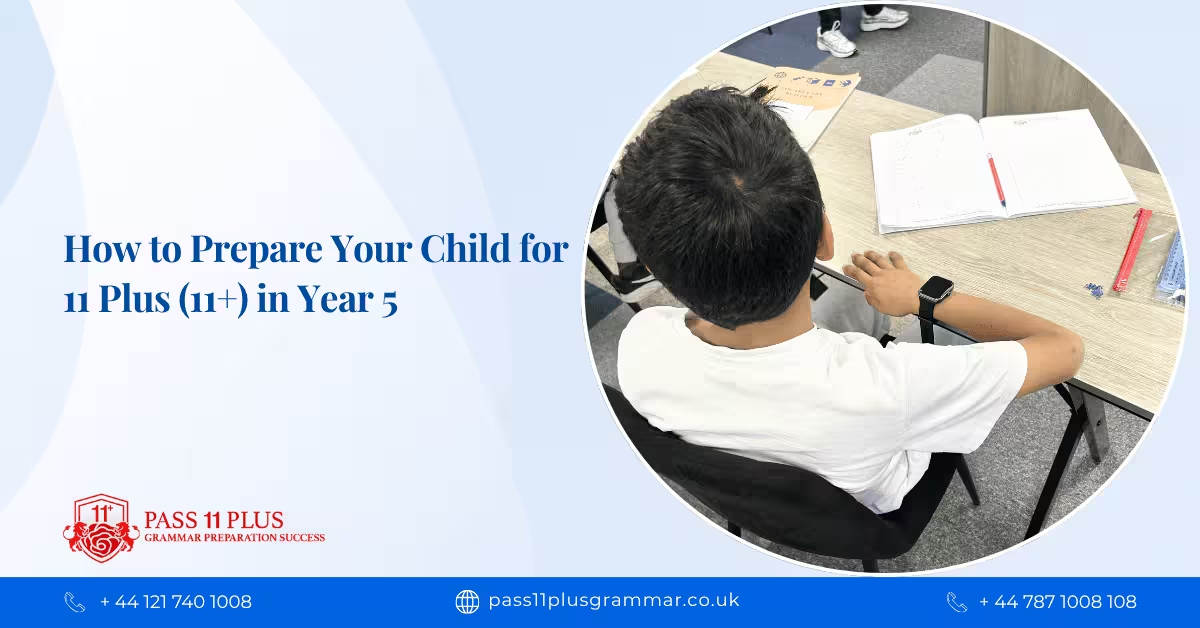
How to Prepare Your Child for 11 Plus (11+) in Year 5
Published on
To prepare your child for the 11 plus in year 5, build core skills first: vocabulary, spelling, comprehension, times tables and mental maths. Once these are solid, usually by the second half of Year 5, add Verbal Reasoning, Non-Verbal Reasoning and timed practice papers. Papers should generally wait until 20 to 25 weeks before the exam, and proper feedback on every paper matters more than doing lots of them.
Year 5 is where the real preparation begins for most children. There's still time, but not so much that you can take it slowly. The good news? If you know exactly what to focus on and in what order, year 5 can be genuinely enjoyable, not stressful, for the whole family.
This guide walks through exactly what to build first, when to bring in reasoning skills, and when to actually start practice papers. No guesswork, just a clear order to follow.
At Pass 11 Plus Grammar, we've guided Birmingham families through exactly this process for over 30 years, with a 97% success rate. Here's the order we follow with every family who joins us in year 5.
Why the order matters so much
A lot of year 5 preparation goes wrong not because families don't work hard enough, but because things happen in the wrong order. Children get handed timed practice papers before they've built the vocabulary or maths fluency to actually do well on them. The result is frustration, low scores, and a child who starts to dislike the whole process.
Build the foundation first. Add reasoning skills once vocabulary is strong. Only then bring in timed papers. Get this order right, and everything else becomes much easier.
The five skills to build first in Year 5
1. Vocabulary and spelling
This is the single biggest factor in Verbal Reasoning, comprehension and descriptive writing. Weekly work on synonyms, antonyms, plurals and homophones, alongside daily reading, should continue right through year 5 and beyond. A weak vocabulary is one of the hardest gaps to close later, so this deserves consistent attention from day one.
2. Comprehension
Most children will face a comprehension test as part of their 11 plus exam. Alongside daily reading, regular comprehension exercises using different text types and question styles help build the flexible reading skills the exam actually rewards.
3. Times tables
Year 5 is really the last stretch to nail times tables properly. Quick, accurate recall, in any order, directly translates into extra marks in the Maths paper simply through speed. Aim for at least one focused times tables session every week through the first half of year 5.
4. Mental maths and problem solving
Regular practice with mental maths questions and worded problems builds the accuracy and speed children need before they ever attempt a timed paper. This should run throughout year 5, right up until practice papers begin.
5. Reading stamina
Sitting still, focusing on a longer passage and pulling out meaning under time pressure is a skill in itself. Daily reading, gradually increasing in length and difficulty, builds this stamina naturally over the course of the year.
When to introduce Verbal and Non-Verbal Reasoning
Children usually pick up Verbal Reasoning fairly quickly, as long as vocabulary and spelling are already reasonably strong. A good approach is spending two or three weeks simply learning the different question types, then moving on to varied weekly practice.
Non-Verbal Reasoning doesn't rely on the same core skills. It rewards working quickly, accurately, and reading each question carefully. A couple of weeks getting familiar with the main question formats, followed by regular practice, is usually enough to build real confidence.
Most families find that introducing both subjects around the midpoint of year 5, once vocabulary is solid, gives the best results. This is exactly the structure our 11 plus tuition follows with every year 5 child.
When should practice papers actually start?
This is where a lot of families go wrong. Practice papers are not meant to teach new skills; they're meant to build speed, accuracy, and confidence once the underlying knowledge is already there.
Weeks before the exam | What to focus on |
More than 25 weeks | Core skills: vocabulary, spelling, times tables, mental maths, comprehension. No timed papers yet. |
20–25 weeks | Begin with easier 11 plus practice papers to build the right pace and accuracy. Introduce reasoning subjects if not already started. |
10–20 weeks | Continue with a steady mix of practice papers across all four subjects, alongside regular 11 plus mocks to track real progress. |
Final 10 weeks | Move onto harder, exam-standard papers to flush out any remaining gaps, alongside regular 11 plus mock test sittings under timed conditions. |
As a simple guide: around 10 papers per subject, so roughly 40 papers in total across English, Maths, Verbal Reasoning and Non-Verbal Reasoning, is usually enough to get most of the available benefit, as long as every single paper is followed by proper marking and feedback.
A simple Year 5 preparation timeline
Term | Focus |
Autumn Year 5 | Core skills across all areas: vocabulary, spelling, times tables, mental maths, comprehension. Gentle introduction to Verbal and Non-Verbal Reasoning question types. |
Spring Year 5 | Continue core skills alongside regular reasoning practice. Begin easier practice papers once your child is around 20–25 weeks from their exam date. |
Summer Year 5 | Move onto more challenging practice papers. An 11 plus intensive courses over the holidays is a great way to consolidate everything before Year 6 begins. |
11 plus tuition
Give your Year 5 child a clear, structured path to success.
Book a free consultation with Pass 11 Plus Grammar and get a plan built around your child's exact starting point.
How Pass 11 Plus Grammar supports Year 5 families
Getting the order right, core skills first, then reasoning, then papers, is one of the biggest reasons families come to us for 11 plus tuition in Birmingham. Rather than handing every child the same worksheet pack, our structured approach to year 5 11 plus tuition adapts to exactly where your child is right now.
Families joining us for 11 plus year 5 tuition get regular access to free 11+ practice papers to reinforce learning at home, alongside thorough marking and feedback on every paper your child completes with us, not just a score.
Our experienced tutors track progress closely, so reasoning subjects and timed papers are introduced at exactly the right moment for your child, not on a fixed generic calendar. As your child gets closer to the exam, regular 11 plus mocks build genuine exam stamina.
Families who prefer to prepare from home can make full use of our 11 plus online tuition. Locally, many families come to us simply by searching for 11 plus tutors in Birmingham, and stay with us because good 11 plus preparation in year 5 is really about the right structure, not just more hours of work.
Frequently Asked Questions
How do I prepare my child for the 11 plus in Year 5?
In year 5, focus on building core skills first: vocabulary, spelling, comprehension, times tables and mental maths. Once these are solid, usually by the second half of year 5, introduce Verbal Reasoning, Non-Verbal Reasoning and timed 11 plus practice papers. Structured weekly tuition helps keep this balance right.
When should my child start doing 11 plus practice papers in Year 5?
Most children benefit from waiting until they have around 20 to 25 weeks left before their exam before starting full practice papers. Starting too early, before core skills are strong, wastes valuable time and can knock a child's confidence.

Mr Singh
Founder, Pass 11 Plus Grammar
Mr Singh is the founder of Pass 11 Plus Grammar, with over 30 years of teaching experience. Having overcome academic setbacks himself, he is passionate about ensuring no child struggles alone. His approach focuses on personalised support, strong foundations, and building confidence. He has helped students achieve outstanding results in 11+ and GCSE examinations
Loading related posts…