Loading page…
Mock Exams vs Practice Papers: Which is Better for 11+ Prep?
Published on
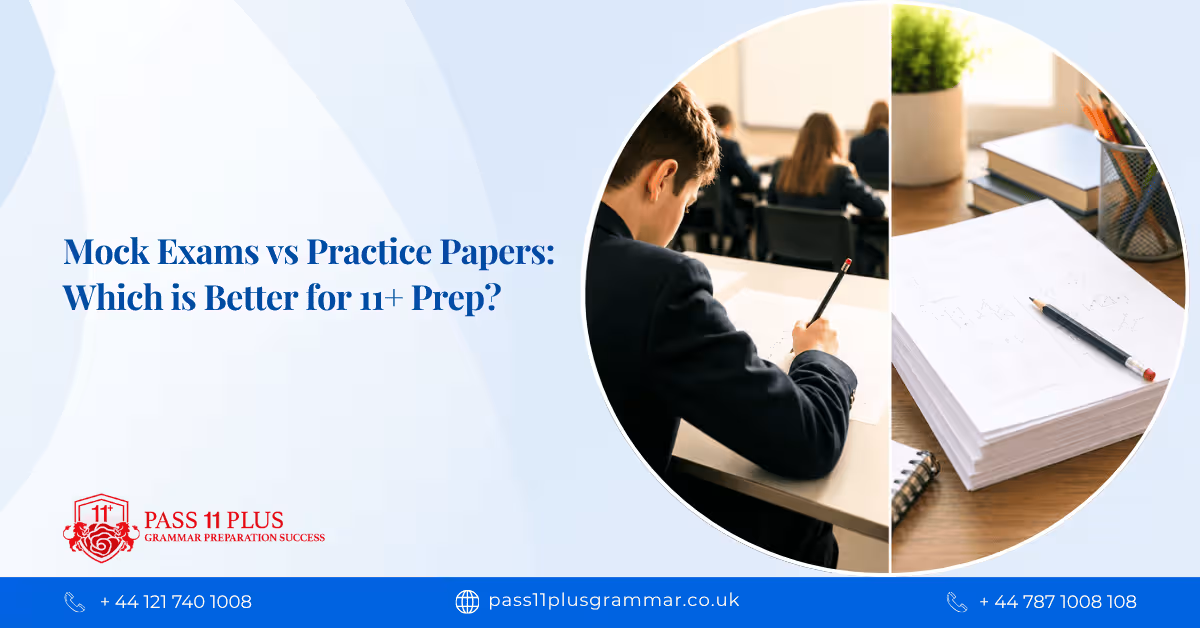
Neither is "better" on its own. 11 plus practice papers build knowledge, one subject or topic at a time, and are used throughout the whole preparation journey. 11 plus mocks simulate the full exam day, all four subjects, strict timing, and are used mainly in the final months to build stamina and measure real readiness. The best 11+ preparation uses both together.
You've probably heard both words a hundred times: mocks and practice papers. Some parents use them like they mean the same thing. They don't. And knowing the difference could make a real difference to how ready your child feels on exam day.
The truth is, you don't need to choose one over the other. Good 11 plus tuition uses both, at the right time, for the right reason. Let's break it down simply.
At Pass 11 Plus Grammar, we've guided parents and children through this exact question for over 30 years, with a 97% success rate. Here's exactly how we explain it to parents.
The key difference
Think of it like learning to swim. Practice papers are like practising each stroke in the shallow end, over and over, until it feels natural. Mock exams are like jumping into the deep end for a full-length, non-stop session to see if everything you've practised actually holds up under pressure.
Plenty of families get started with our free 11+ practice papers, simply to see how this "shallow end" practice feels before committing to a full programme.
11 Plus Practice Papers
Focus on one subject or topic at a time
Can be timed or untimed, flexible
Marked instantly with full explanations
Used to build knowledge and spot gaps
Done throughout the whole preparation period
Ideal 2–3 times a week during active prep
11 Plus Mock Exams
Cover all four subjects in one sitting
Strict timed conditions with breaks
Show a score, ranking and topic breakdown
Used to measure overall exam readiness
Best in the final 3 to 6 months before the exam
Usually 3 to 6 total across the whole journey
Mock Exams vs Practice Papers
Feature | 11 Plus Mock Exams | 11 Plus Practice Papers |
Purpose | Simulate exam day, build stamina and confidence | Build knowledge, find weak topics |
Length | 1.5–2.5 hours, all subjects | 15–45 minutes, one subject at a time |
Timing | Strict countdown, structured breaks | Timed or untimed, flexible |
Feedback | Score, ranking, subject breakdown | Instant marking, worked solutions |
Conditions | Exam conditions, no pausing | Can pause, review, retake |
Frequency | 3–6 total across preparation | 2–3 per week during active prep |
Best for | Final 3–6 months before the exam | Throughout the whole preparation period |
When should each one start?
The right balance changes as your child gets closer to the exam. Here's roughly how it should look, year by year.
Year group | Practice papers | Mock exams |
Year 4 | Light, untimed topic practice, 2–3 times a week | Not recommended yet |
Year 5, Autumn | Timed topic papers across subjects, 3 times a week | One baseline mock to see the starting point |
Year 5, Spring/Summer | Mixed timed papers, 3–4 times a week, targeting weak spots | 1–2 mocks, spaced 4–6 weeks apart |
Year 6, final 3 months | Short, targeted papers between mocks, 2–3 times a week | 2–3 mocks, last one 2–4 weeks before the real exam |
A good rule of thumb: bring in mock exams once your child is consistently scoring around 65–70% on timed practice papers across all four subjects. For most children, this happens in spring or summer of Year 5. Experienced 11 plus tutors will usually track this for you, so you're never guessing when the moment is right.
🎯 Practice Today, Perform Tomorrow
See How Ready Your Child Really Is
From timed mocks exams under real conditions to free 11+ practice papers, we help you track progress every step of the way.
How the two work together, as a cycle
The real magic happens when mocks and practice papers feed into each other. Here's the simple loop we use with every family at Pass 11 Plus Grammar.
1. Sit a mock exam under full conditions
Your child works through all four subjects in one timed sitting, with proper breaks. This shows how they really perform under pressure, not just what they know.
2. Look closely at the results
The report shows scores by subject and by topic. Pick out the two or three weakest areas. These become the focus for the next few weeks.
3. Work on those weak spots with practice papers
Over the next few weeks, use targeted practice papers on exactly those topics. Go through every wrong answer properly, not just the score.
4. Sit another mock to check progress
Compare the new results to the last mock. The weak topics should look stronger. Anything still tricky becomes the next focus area.
Round and round it goes, gradually turning weak spots into strong ones, right up until exam day. This is exactly the cycle our 11 plus mocks are built to support.
How do online 11 plus mock exams help
Online 11 plus mock exams have become hugely popular, and for good reason. They give instant results instead of days of waiting, detailed digital reports, and the chance to go back through every question with a full explanation. They're also usually more affordable than in-person sittings.
In-person mocks still have real value too, mainly the experience of sitting in an unfamiliar room with other children, which helps ease exam-day nerves. Many of our families do most of their 11 plus mock exams online through the school term, then add one in-person sitting closer to the real exam for that extra bit of confidence. Either format works well, as long as the 11 plus mock tests are sat properly, under real timed conditions, rather than rushed through.
How Pass 11 Plus Grammar helps your child
Getting the balance right between practice and mocks is one of the biggest reasons families come to us. Our weekly sessions are built around exactly this cycle: teach the skill, practise it, then test it under pressure.
Every family gets regular practice built into their sessions, so your child is always working on the right topics, not just doing random papers for the sake of it. As they progress, our 11+ mock exams give a true picture of readiness, with a full breakdown of strengths and weak spots after every sitting.
Those results then shape the very next set of lessons, so nothing is ever wasted effort. This works whether your family joins us for 11 plus tuition in Birmingham in person, or prefers the flexibility of 11 plus online tuition from anywhere in the country. Families based locally often start by simply asking around for tutors, and end up staying with us for the whole journey precisely because of this practice-and-mock cycle.
Frequently Asked Questions
Should my child do mock exams or practice papers first?
Start with 11 plus practice papers. These build subject knowledge and familiarity with question types, forming the foundation. Once your child has a solid grasp of all four 11+ subjects, usually by mid-Year 5, introduce 11 plus mock exams to simulate the full exam day.
Can practice papers replace mock exams?
No. Practice papers and mock exams do different jobs, and both matter. Practice papers build knowledge and highlight weak topics. Mock exams build exam stamina, time management under pressure, and the ability to perform across all four subjects in one sitting.

Mr Singh
Founder, Pass 11 Plus Grammar
Mr Singh is the founder of Pass 11 Plus Grammar, with over 30 years of teaching experience. Having overcome academic setbacks himself, he is passionate about ensuring no child struggles alone. His approach focuses on personalised support, strong foundations, and building confidence. He has helped students achieve outstanding results in 11+ and GCSE examinations
Loading related posts…