Loading page…
What Happens If You Fail Your SATs in Year 6?
Published on
You cannot fail SATs. There is no pass or fail. Your child gets a scaled score from 80 to 120 for each test. A score of 100 or more means they are working at or above the expected standard. A score below 100 means they may need more support to reach it. Teachers use the results to spot where extra help would be useful, especially when your child starts secondary school. A low score does not stop your child from going to secondary school, and it does not decide grammar school places.
If you are worried about SATs, take a deep breath. The short answer is that nothing scary happens. This guide explains what really happens if you fail your SATs in Year 6, so you can feel calm and know what to do next.
What happens if you fail your SATs in Year 6?
Nothing bad happens if you "fail" your SATs. There is no punishment, no resit and no letter saying "you did not pass". That is because SATs are not a pass or fail test.
SATs are the end of Key Stage 2 tests that Year 6 children take in May. The tests are in English grammar, punctuation and spelling, English reading and maths. The government says they are a way of making sure every child has learned the basics of reading, writing, maths and science when they leave primary school.
The results help teachers see where a child might need extra help as they move up to secondary school. That is all they are for. A lower score is simply a signpost that says, "Here is where a little more support could help."
Can you fail Year 6 SATs? Why SATs are not pass or fail
Many parents and children search for "can you fail Year 6 SATs" or "what happens if you fail SATs Year 6". The honest answer is no. SATs do not have a pass mark. Instead, your child gets a scaled score, and that score is compared with an "expected standard".
Here is how it works in simple words:
If your child scores 100 or more, they are working at or above the expected standard.
If your child scores below 100, they may need more support to reach the expected standard.
That is the same idea as a school report. It tells you where your child is now, not where they will end up. Children grow and learn quickly between Year 6 and Year 11.
What does a low score mean? Scaled scores explained
Each SATs test is marked, and the marks are turned into a scaled score. The scaled score range is 80 to 120. This helps make results fair from one year to the next, even if one paper is a little harder than another.
Scaled score | What it means |
100 or more | Your child is working at, or above, the expected standard |
Below 100 | Your child may need more support to help them reach the expected standard |
80 | The lowest possible scaled score |
120 | The highest possible scaled score |
Notice the careful words, "may need more support". The government does not say "failed". It says your child may need a little help. This is a kind and practical way to look at it.
What happens if you fail SATs in Year 6: What really changes?
Parents often worry about what comes next. Here are the most common worries, and the truth about each one.
Worry | The truth |
"My child will not get into secondary school." | Your child will still go to secondary school. Councils decide school places using their admissions rules, not SATs scores |
"My child cannot go to a grammar school now." | No. Grammar schools use the 11+ and their own admissions rules, not SATs results |
"My child will have to resit." | SATs are taken once, at the end of Year 6. There is no national resit |
"The result will be made public." | Your child's individual results are not published by the school or the Department for Education |
"It will go on a record that follows my child." | The school reports the results to you, and secondary schools can see them to help plan support. They are not a label |
"My child is behind forever." | No. Results show where your child is now, and children can catch up with the right help |
What does change is the support. Secondary school teachers can see SATs results when your child arrives in Year 7. They use them, along with their own checks, to understand where your child might need extra help in English or maths.
What happens if I fail my SATs? A message for children
If you are a child reading this, here is a message just for you. Many children search "what happens if u fail SATs", and it is very normal to feel nervous. Here are the facts in kid-sized words.
1. You cannot fail SATs
There is no pass or fail. You get a score, and that is all.
2. Nobody gets in trouble
Not you, not your family and not your teacher. SATs are not a punishment.
3. You will still go to secondary school
Your place does not depend on your SATs score.
4. The test is only to help your teachers
It shows where you are doing brilliantly, and where a little extra help could make things easier.
5. Just do your best
Try your hardest, take deep breaths and ask a grown up if you feel worried. That is already a great job.
What happens when you fail SATs: Writing and science teacher assessments
Not every subject has a test. English writing and science are marked by your child's teacher, who looks at your child's work across the whole year. These judgements are not pass or fail either.
Subject | Possible outcomes |
English writing | Working towards the expected standard, working at the expected standard, or working at greater depth within the expected standard |
Science | Has not met the expected standard, or is working at the expected standard |
The official advice is clear: do not worry if your child is not working at the expected standard. The results help teachers work out where your child may need extra help.
Year 6 SATs Tuition
Worried about your child’s Year 6 SATs results?
Our expert Year 6 SATs tutors help children strengthen their English and Maths skills, build confidence, and prepare for the next stage of their education.
How many children do not meet the expected standard?
If your child is below the expected standard in one subject, you are far from alone. Here are the official national figures for 2026.
Subject (2026) | Pupils who met the expected standard |
Reading | 75% |
Maths | 75% |
Grammar, punctuation and spelling | 74% |
Writing | 73% |
All of reading, writing and maths together | 63% |
This shows that many children are still working towards the standard in at least one subject. In 2026, just over a quarter of pupils (28%) were assessed as not meeting the standard in all of reading, writing and maths together. So please do not feel that your child is behind or on their own. Lots of children need a little more time in some areas, and they catch up.
What to do if your child's SATs results are below 100
If your child scores below 100 in one or more tests, here are some calm, practical steps.
1. Start with kind words
Tell your child you are proud of how hard they tried. Say that SATs are not pass or fail, and that you will look at the results together.
2. Talk to the class teacher
Speak to your child's teacher if you have questions about their results and the support they might need. Ask which topics were tricky and what your child did well.
3. Look at the whole picture
Read the full school report, not just the numbers. It includes your child's strengths, achievements and progress, and the teacher assessments in writing and science.
4. Share the results with secondary school
Let your child's new school know about any worries. Teachers in Year 7 can plan extra help in English or maths if needed.
5. Make a small, happy plan
Pick one or two topics, such as reading speed or times tables, and practise them for a few minutes a day over the summer. Keep it light and fun.
Can SATs results be re-marked?
Sometimes a result feels wrong. Parents cannot ask for a re-mark directly, but the school can. Schools can apply for a review of marking if they have evidence that a specific part of the mark scheme was not applied correctly, or that a clerical error happened.
The review deadline is short, and the outcome goes back to the school later, in early September. So if you are worried about a result, speak to your child's teacher or headteacher soon after you get it.
What if your child misses SATs or cannot take them?
Life happens. Here is what the official guidance says.
Ill on a test day: The school may be able to arrange for your child to take the missed test up to 5 school days later. The school must ask for approval first.
Not suitable to take the tests: A headteacher may decide that a child should not take the tests, for example, if the child is working below the test standard or is not well enough at the time.
Different assessments: Some children are assessed in other ways, such as the pre-key stage standards or the engagement model. Their school report will explain this.
If you have any worries, please speak to your child's school as soon as possible. They can explain what is right for your child.
How to help your child feel calm about SATs
If your child is in Year 6 now, you have lots of time to build calm confidence for SATs week 2027. Here is what helps most.
Talk about SATs in a relaxed way: Say, "They are just to show what you know, and to help your teachers."
Keep practice short: Ten to twenty minutes is enough, and a rest day is fine.
Read every day: Reading helps with the reading test, the grammar test and writing.
Practise times tables and mental maths: A little each day builds speed and confidence.
Praise effort, not scores: Say, "I love how you kept going," rather than just "Well done on the mark".
Protect sleep and play: A rested, happy child does better and feels better.
How Pass 11 Plus Grammar supports your child in Year 6
Most children do well with good teaching at school and a little practice at home. But extra help can be a real boost when a child keeps finding the same topics tricky, loses confidence, or feels nervous about tests.
At Pass 11 Plus Grammar, our Year 6 SATs tuition covers maths, English reading and grammar, punctuation and spelling. We help children understand each topic, practise under calm exam conditions and build the confidence to show what they know. It is available online across the UK, or in person at our centre.
Our experienced SATs tutors look carefully at where each child is today. They fix gaps gently, step by step, and keep learning fun. We focus on understanding, not pressure.
If you would like friendly advice close to home, you can come to our SATs tuition in Birmingham, and we will happily talk through your options.
Final thoughts
So, what happens if you fail your SATs in Year 6? Nothing frightening. SATs are not pass or fail. A score below 100 simply means your child may need a little more support to reach the expected standard. It does not change their secondary school place, and it does not decide grammar school entry.
Stay calm, talk to the teacher, and keep your child's confidence high. With kind words and small, steady steps, children grow quickly. At Pass 11 Plus Grammar, we are always here to help along the way.
Frequently Asked Questions
What happens if you fail your SATs in Year 6?
Nothing bad happens, because SATs are not a pass or fail test. Your child gets a scaled score from 80 to 120. A score of 100 or more means they are working at or above the expected standard, and a score below 100 means they may need more support to reach it. Teachers use the results to see where extra help would be useful, especially as your child moves to secondary school.
What happens if you fail SATs in Year 6 and go to secondary school?
Your child still goes to secondary school. Places are decided by your local council's admissions rules, not by SATs results. Secondary schools can see pupils' results, and teachers use them to find out where your child may need extra help in Year 7.
Do SATs results affect grammar school places?
No. Grammar school places are decided by the 11+ and each school's admissions rules, not by KS2 SATs results. A low SATs score does not stop a child from applying for or getting a grammar school place.
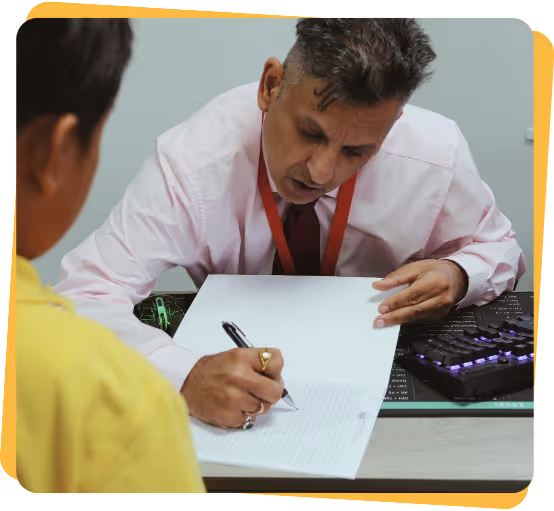
Mr Singh
Founder, Pass 11 Plus Grammar
Mr Singh is the founder of Pass 11 Plus Grammar, with over 30 years of teaching experience. Having overcome academic setbacks himself, he is passionate about ensuring no child struggles alone. His approach focuses on personalised support, strong foundations, and building confidence. He has helped students achieve outstanding results in 11+ and GCSE examinations
Loading related posts…