Loading page…
Year 6 After SATs Activities
Published on
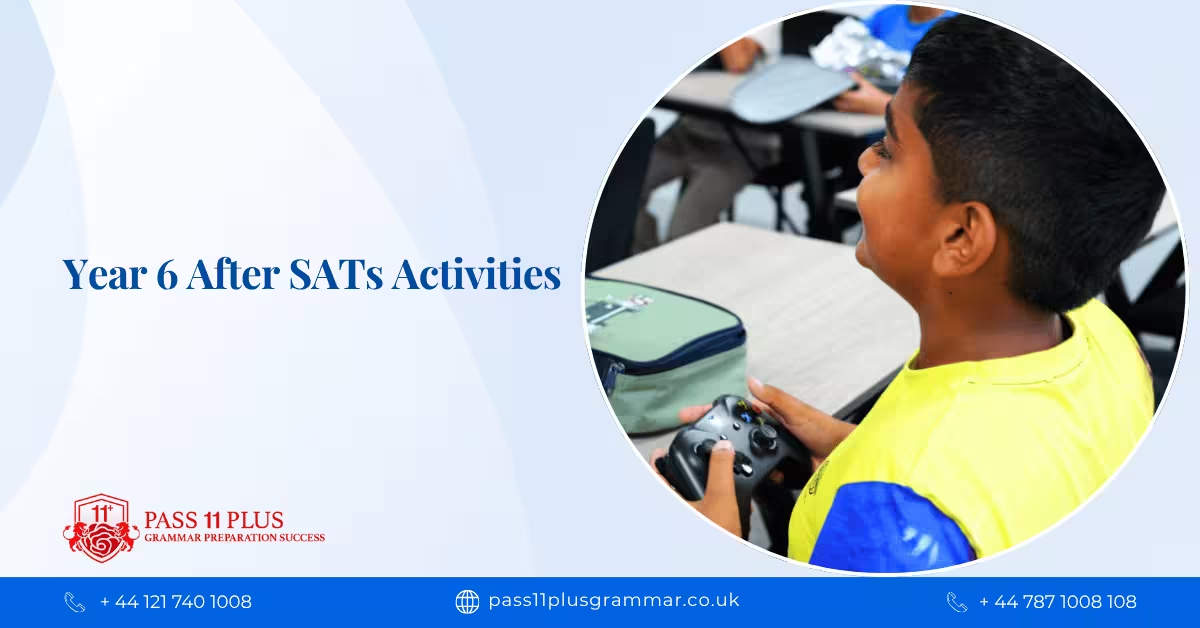
After SATs, most Year 6 classes switch from test practice to projects, maths investigations, creative writing, team challenges and transition activities for secondary school. Good ideas include running a mini business, an escape room, a class book of memories, a school play and outdoor challenges. Keep a little reading, maths and writing going each week, so skills stay fresh.
The tests are over, and everyone is ready for something new. This guide shares fun, simple Year 6 after SATs activities for teachers and parents, from projects and maths games to writing ideas and ways to get ready for secondary school.
What do Year 6 do after SATs?
When the last SATs paper is finished, a big weight lifts off Year 6. So, what do Year 6 do after SATs? They keep learning, but in a different way. Instead of practice papers, classes move to projects, investigations, creative work and activities that help children get ready for secondary school.
The rest of the summer term is a lovely chance to use what children have learned in real, meaningful ways. There is more talking, more teamwork and more choice. It is also a time to celebrate everything they have achieved in primary school.
This guide is for teachers and for parents who are searching for after SATs activities Year 6 children will really enjoy. We share ideas for the classroom and for home, and we keep each one simple and low cost.
After SATs activities Year 6 children love: Why they still matter
It can feel tempting to wind everything down. But the weeks after SATs are valuable, and here is why.
Teachers still make judgements. English writing and science are not tested. Teachers decide those results from your child's work across the year, so writing practice still counts.
Skills stay fresh. Children who stop reading, writing and doing maths for weeks often feel rusty in Year 7. Light, regular practice prevents that.
It is a chance to go deeper. With test pressure gone, children can explore ideas, make decisions and work in teams.
Transition matters. Moving to secondary school is a big step. Time spent on confidence, friendships and routines makes a real difference.
After SATs week, there are about nine school weeks, depending on your school's calendar. That is a lot of time, so a little planning goes a long way.
Fun things to do after SATs: Quick ideas
Here is a quick list of fun things to do after SATs. Each one is easy to set up, and each one teaches something useful.
Activity | What children learn |
Maths escape room | Teamwork, logic and problem solving |
Mini business or enterprise day | Budgeting, pricing and decision making |
Class book of memories | Writing, reflection and pride |
Design a board game | Rules, creativity and clear instructions |
Write a class newspaper | Reporting, editing and layout |
Outdoor team challenges | Cooperation, leadership and fitness |
School play or talent show | Confidence, speaking and working together |
Letter to my future self | Thinking ahead and expressing hopes |
Science experiments | Predicting, testing and explaining |
Reading in the sun | Calm, vocabulary and a love of books |
Year 6 SATs Tuition
Want your child to feel confident before Year 7?
Our Year 6 SATs tutors help children keep their maths and English strong, one calm step at a time.
Year 6 after SATs maths activities
It is tempting to drop maths altogether, but this is a great time for fun, open-ended maths. Investigations and projects let children use what they know in new ways, and they often lead to richer talk than routine questions.
1. Shape and pentomino puzzles
Pentominoes are shapes made from five squares. Ask children to find all the different shapes, fit them into a grid and spot rotations and reflections. It builds careful thinking.
2. Number pattern investigations
Explore number sequences, such as triangular numbers or staircase patterns. Ask, "What comes next, and how do you know?" Children love finding a rule.
3. Logic puzzles with factors and primes
Set puzzles about factors, multiples and prime numbers. They need reasoning, not just calculation, and they spark great discussion.
4. Enterprise and event planning
Plan a class fair, a picnic or a trip. Children work out costs, timetables, measurements and profit. It is real maths with a real purpose.
5. Data handling projects
Ask a question, such as "What is our class's favourite playground game?", then survey, record, graph and report. Children practise charts and averages in a meaningful way.
6. Escape room challenges
Link puzzles in algebra, geometry and number so that teams solve one to unlock the next. It makes maths feel like a game.
Year 6 activities after SATs: English and creative writing
Writing still matters, because teachers use it for their judgement of each child. The good news is that writing after SATs can be playful, personal and fun.
A class book of memories: Each child writes a page about their favourite moment, a funny story or advice for younger pupils. Bind the pages into a keepsake.
A class newspaper: Children write reports, interviews, adverts and sports news. Try a front page about the school year.
Letter to my future self: Write a letter to open at the end of Year 7. What do you hope for? What are you proud of?
Story writing with a twist: Give a surprising starter, like "The new school had a secret door." Let imaginations run wild.
Poetry and performance: Write poems about growing up, then read them aloud with expression.
A friendly debate: Pick topics such as "Should homework be banned?" and teach children to argue with kindness and evidence.
Praise ideas first, then pick one small thing to improve, such as punctuation or a stronger verb. Keep it light and kind.
Fun activities for Year 6 after SATs: Projects and team challenges
Projects work brilliantly after SATs because they give children a clear goal. When pupils know what they are working towards, they stay focused and feel proud of the result.
Project | What children do | Skills |
Leavers' production | Write, rehearse and perform a play or assembly | Speaking, teamwork, confidence |
Design a theme park | Plan rides, costs, maps and posters | Scale, money, art and persuasion |
Mini business | Make a product, set a price and sell it | Budgeting, marketing, maths |
Outdoor challenge day | Complete team games and problem-solving tasks | Leadership, cooperation, fitness |
Research project | Study a topic they love and present it | Research, reading and speaking |
Memory time capsule | Collect items and notes to open in the future | Reflection and writing |
Fun things to do after SATs at home
Parents, you can help your child make the most of these weeks too. Start by celebrating. Your child has worked hard, and a treat, a day out or a family meal is a lovely way to say well done.
1. Plan a "SATs are done" celebration
Choose something small and happy, like a picnic, a film night or a trip to the park. Let your child pick.
2. Cook and bake together
Cooking uses measuring, fractions, time and reading instructions. It is a delicious way to keep maths alive.
3. Read for pleasure
Let your child choose new books, comics or magazines. Visit the library together and start a summer reading challenge.
4. Get outside
Walks, bike rides, swimming and sport help children let off steam and feel good after a busy year.
5. Try a family project
Plan a holiday route, a garden makeover or a family quiz. Children use maths, writing and research without noticing.
What to do with Year 6 after SATs: Get ready for secondary school
One of the best uses of these weeks is helping children feel ready for the big move. Many children visit their new secondary school in June or July, and it is normal for them to feel a mix of excited and nervous.
Common worry | A helpful activity |
Getting lost | Look at a school map together and practise the journey |
Making friends | Talk about how to start a chat, and arrange a meet-up with classmates |
Being organised | Practise packing a bag and using a timetable |
Bigger work | Remind your child they have learned lots, and that teachers will help |
Everything feeling new | Write a "worry list" and a "what I am looking forward to" list, then talk about both |
Listen first, then help. Say, "That is a normal worry," before you give advice. Children feel braver when they feel heard.
After SATs: Results day and extra support
While children enjoy these weeks, some may worry about their results. Here are the official facts, in simple words. Schools can see the results from Tuesday 6 July 2027, and parents should receive them before the end of the summer term.
SATs are not pass or fail. Each test gives a scaled score from 80 to 120. A score of 100 or more means a child is working at or above the expected standard, and a score below 100 means they may need more support. The results help teachers plan help, and they do not decide secondary school places.
How Pass 11 Plus Grammar helps Year 6 SATs students
If your child found some topics tricky, a little support before Year 7 can build confidence. At Pass 11 Plus Grammar, our Year 6 SATs tuition covers maths, English reading and grammar, punctuation and spelling. We look at where each child is today and help them firm up anything that still feels wobbly, in a calm and friendly way.
Our experienced Year 6 SATs tutors know Key Stage 2 inside out. If your child is in Year 5 now, you can also use them to plan a stress-free route to next year's SATs, starting early and keeping things light.
Final thoughts
The best Year 6 after SATs activities are the ones that feel fun and still help children grow. Mix projects, maths investigations, creative writing and team challenges, keep a little reading and maths going, and spend time helping children feel ready for secondary school.
These weeks are a gift. Celebrate what children have achieved, keep things happy and let confidence grow. At Pass 11 Plus Grammar, we are always here to help when you are ready.
Frequently Asked Questions
What to do with Year 6 after SATs?
Choose a balance of fun and purpose. Good ideas include enterprise projects, maths investigations and escape rooms, a class book of memories, outdoor team challenges, a school play and activities that help children feel ready for Year 7. Keep a little reading, maths and writing going each week so skills stay fresh.
What are fun activities for Year 6 after SATs?
Fun activities include maths puzzles and escape rooms, running a mini business, designing a board game, writing a class newspaper, making a leavers' memory book, outdoor team challenges, a talent show and a letter to your future self. They keep children thinking while giving them a break from test practice.
Do Year 6 still have lessons after SATs?
Yes. School continues until the end of the summer term. Teachers usually change the type of learning rather than stop it, with more projects, investigations and creative work, and they keep making teacher assessments for writing and science.
Mr Singh
Founder, Pass 11 Plus Grammar
Mr Singh is the founder of Pass 11 Plus Grammar, with over 30 years of teaching experience. Having overcome academic setbacks himself, he is passionate about ensuring no child struggles alone. His approach focuses on personalised support, strong foundations, and building confidence. He has helped students achieve outstanding results in 11+ and GCSE examinations
Loading related posts…