Loading page…
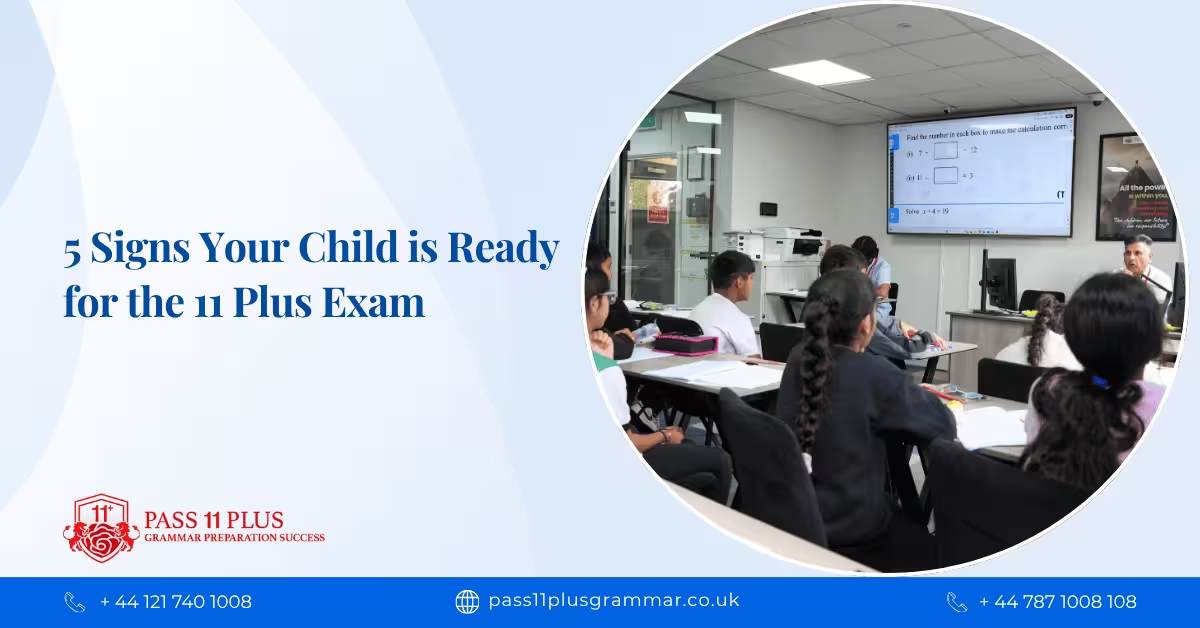
5 Signs Your Child is Ready for the 11 Plus Exam
Published on
Five signs your child is ready to start 11 plus prep: they have age-appropriate reading and number skills, they can focus on a task for 20 to 30 minutes, they show genuine curiosity about puzzles and problems, they cope reasonably well with getting things wrong, and they're in the right year group window, usually Year 3 to Year 5.
"Are we starting too early?" or "Have we already left it too late?" These are two of the most common worries we hear from parents. The truth is, there's no single magic age. What matters far more is whether your child is showing the right signs, right now, that they're ready to begin.
This isn't about whether your child is ready to pass the 11 plus. That comes much later. This is about whether they're ready to begin, calmly and confidently, without it feeling like a battle.
At Pass 11 Plus Grammar, we've guided thousands of families across the UK through exactly this decision, with over 30 years of experience and a 97% success rate. Here's what we actually look for.
Sign 1: Age-appropriate reading and number skills
Can they read and add confidently for their age?
This doesn't mean your child needs to be top of the class. It simply means their reading, vocabulary and basic number skills should be roughly in line with what's expected for their year group. If your child reads reasonably fluently and can handle everyday maths without a huge struggle, they have the foundation needed to begin structured 11 plus tuition.
If reading or number confidence is genuinely behind, that's not a reason to wait indefinitely. It's simply a sign to start with gentle foundation work first, rather than jumping straight into formal 11 plus preparation.
Sign 2: They can focus on a task for 20 to 30 minutes
Can they sit still and concentrate without constant prompting?
Structured tuition asks children to focus for meaningful stretches of time, not just a few minutes. If your child can sit through a short chapter of a book, a puzzle, or a homework task for 20 to 30 minutes without needing constant redirection, this is a strong sign they're ready for regular sessions.
Every child's attention span develops at a different pace. If this is still a work in progress, gentler, shorter sessions, like the ones used in our year 3 11+ tuition and year 4 11+ tuition programmes, can help build this skill gradually rather than demanding it from day one.
Sign 3: Genuine curiosity about puzzles and problems
Do they enjoy a challenge, or shy away from it?
Children who genuinely enjoy puzzles, riddles, word games or number challenges tend to take to Verbal and Non-Verbal Reasoning far more naturally later on. This curiosity doesn't need to be about schoolwork specifically. A child who loves a good crossword, a logic game, or building something tricky with construction toys is showing exactly the mindset that structured prep rewards.
Sign 4: They cope reasonably well with getting things wrong
Can they handle a wrong answer without shutting down?
This one matters more than most parents expect. 11+ preparation involves plenty of mistakes along the way, that's how learning works. A child who gets frustrated occasionally but can bounce back and try again is ready. A child who becomes deeply upset by every wrong answer may need a little more emotional groundwork first, which experienced 11+ tutors are used to building gently over time.
Sign 5: They're in the right year group window
Are they roughly Year 3 to Year 5?
Timing genuinely matters. Starting far too early, formal exam-style practice before Year 3, rarely helps and can create unnecessary pressure. Leaving it until the very final months of Year 6 with no foundation at all makes things needlessly stressful. The sweet spot for most children sits somewhere between Year 3 and Year 5.
Year group | What "ready to start" looks like |
Year 3 | A gentle, playful introduction focused on enjoyment and reading, through our year 3 11+ tuition, no pressure at all. |
Year 4 | Building solid foundations, spelling, times tables and comprehension, through structured year 4 11+ tuition. |
Year 5 | Introducing Verbal and Non-Verbal Reasoning, alongside our free 11+ practice papers, through year 5 11+ tuition. |
Year 6 | Full exam preparation, regular 11+ mocks, our intensive courses, and dedicated year 6 sats tuition where needed. |
A simple way to check readiness at home
Before booking anything, it's worth spending a week or two simply observing your child in ordinary, everyday moments. You don't need a formal test for this, just a bit of attention to how they naturally behave.
Reading time. Sit with them for a chapter of a book. Are they following the story, or losing track of what's happening?
A tricky puzzle. Try a crossword, wordsearch, or logic puzzle together. Do they want to keep going, or give up after the first attempt?
A maths challenge. Ask a simple worded problem, not a times table drill. Do they try to work through it, or freeze immediately?
A mistake moment. Let them get something wrong naturally, in a game or homework task. Do they shrug it off and try again, or does it spiral into upset?
A quiet stretch. Time how long they can sit with one task before needing a break or a prompt from you.
None of these need to go perfectly. What you're really looking for is a general pattern: a child who's broadly curious, broadly resilient, and broadly able to focus, even if none of it is flawless yet. That pattern is what a good tutor works with from day one.
11 plus tuition
Give your child the right start, at the right time.
Get in touch with us today to book a free consultation with Pass 11 Plus Grammar.
How Pass 11 Plus Grammar helps families get the timing right
Deciding when to start is one of the most common questions we help families with. With over 30 years of experience and a 97% success rate, we've seen exactly how different starting points play out, and what actually works best for different children.
Rather than a single generic course, our approach adapts to exactly where your child is right now, whether that means a gentle introduction through year 3 11+ tuition, focused foundation-building in year 4 11+ tuition, or structured reasoning work in year 5 11+ tuition. As your child progresses, regular 11+ mocks and our 11+ intensive courses build genuine exam confidence, right through to Year 6.
Our experienced tutors have supported thousands of students across Birmingham and the wider UK, helping them secure places at some of the country's most competitive grammar schools. Getting the starting point right, matched to your child's actual readiness rather than a fixed calendar, is one of the biggest reasons our results stay so consistently strong.
Frequently Asked Questions
What are the signs my child is ready to start 11 plus prep?
Five key signs are: age-appropriate reading and number skills, the ability to focus on a task for 20 to 30 minutes, genuine curiosity about puzzles and problems, coping reasonably well with getting things wrong, and being in the right year group window, usually Year 3 to Year 5.
What if my child doesn't show all five signs yet?
That's completely normal. Very few children show all five signs at once. A good tuition provider will start gently in whichever areas are weakest, building readiness gradually rather than waiting for perfect conditions before starting.

Mr Singh
Founder, Pass 11 Plus Grammar
Mr Singh is the founder of Pass 11 Plus Grammar, with over 30 years of teaching experience. Having overcome academic setbacks himself, he is passionate about ensuring no child struggles alone. His approach focuses on personalised support, strong foundations, and building confidence. He has helped students achieve outstanding results in 11+ and GCSE examinations
Loading related posts…